Torque, Tools, and Trailblazers: Meet the Women Quietly Revolutionising Britain's Racing Garages
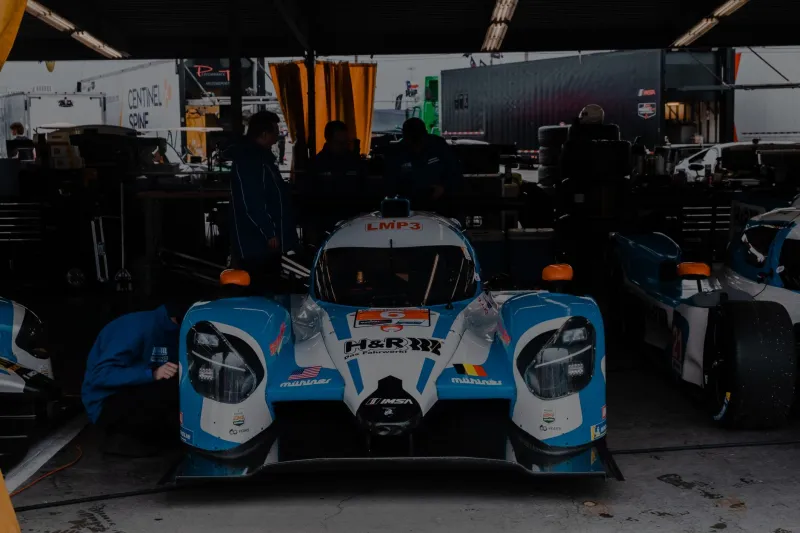
Kate Morley can strip and rebuild a sequential gearbox in under four hours. She's done it in three and a half on a race weekend when time was tight and the pressure was on. She's been doing this job for six years, working her way from data logging intern to lead transmission engineer at a British GT team based out of Silverstone. She is exceptionally good at her work.
She is also, still, one of very few women in her specific role in British motorsport. That's the tension at the heart of this story: the gap between how much things have genuinely changed in the sport's garages and engineering offices, and how much further there is still to go.
A Different Paddock
Anyone who's spent time around British motorsport over the past decade will have noticed the shift, even if they couldn't quite quantify it. The paddock looks different to how it did in the early 2000s. Walk the pitlane at a BTCC round, or spend a weekend at a Formula 3 event at Brands Hatch, and you'll see women in fireproofs and overalls, laptops open, headsets on, doing the actual work of making race cars go fast.
The numbers, while still far from representative, are moving in the right direction. Motorsport UK data suggests that female participation in technical and engineering roles across British racing has increased by roughly thirty per cent over the past five years. University motorsport programmes — the pipeline that feeds the professional paddock — are reporting steadily rising female enrolment in engineering and data analysis pathways.
But statistics only tell part of the story. The more interesting narrative is in the individual journeys — the women who came into this industry despite the barriers, not because of their absence.
Getting Through the Door
"The hardest part wasn't the technical side," says Priya Nair, a data engineer who works with a Formula 4 team and graduated from Loughborough University's motorsport engineering programme two years ago. "The hardest part was convincing people to take you seriously before you'd proved yourself. You'd walk into a garage and see the look — just a flicker, but it was there. Like, what are you doing here?"
That 'look' is something virtually every woman in a technical motorsport role describes in some form. Not always overt hostility — the industry has largely moved past the era of explicit gatekeeping — but a low-level ambient scepticism that required women to demonstrate competence more quickly and more definitively than their male counterparts.
"You had to be ten per cent better to be treated as equal," is how one experienced race engineer, who has worked in British motorsport for over fifteen years, puts it. "That's exhausting. But it also means the women who've made it through are genuinely exceptional, because they had to be."
The cultural gatekeeping has been reinforced, historically, by structural factors. Motorsport's informal recruitment networks — the word-of-mouth, the old-boys connections, the 'we know someone who might be good' conversations — naturally perpetuated themselves. If the people doing the hiring were predominantly male, and they were drawing on social networks that were predominantly male, the pipeline stayed narrow almost by default.
Changing the Culture From Inside
What's different now is that the women who have broken through are actively working to widen the door behind them. Mentoring programmes, school outreach initiatives, and visibility campaigns are all playing a role — but perhaps more important is the simple fact of representation.
"When I was at school, I didn't know women worked in motorsport engineering," says Amy Fletcher, a composite technician at a British touring car outfit. "I knew about drivers, obviously. But engineers? I had no idea. If I'd seen someone who looked like me doing this job when I was fourteen, I might have got here five years earlier."
Amy now volunteers with a school outreach programme that takes motorsport engineering demonstrations into secondary schools in the East Midlands. She is blunt about why she does it: "I want the next generation of girls who are good at maths and physics to see this as a real option. Not a niche exception. A real, normal career path."
The cultural shifts within garages themselves are harder to document but equally significant. Several engineers and technicians described environments that have changed meaningfully as team compositions have diversified. Communication styles, working practices, and team dynamics all evolve when the group around the workbench stops being homogeneous.
"I think we're better at collaboration than we were," says one senior engineer at a Silverstone-based Formula 3 outfit. "I don't want to make sweeping generalisations, but having a more mixed team has made us think harder about how we communicate, how we share information, how we solve problems together. That's not nothing."
The Technical Contributions
It would be a disservice to frame this purely as a cultural story, because the technical contributions of women in British motorsport are entirely concrete and entirely impressive.
Kate Morley's work on transmission reliability — specifically her development of a monitoring protocol that uses vibration data to predict gearbox wear before it becomes a failure — has been adopted by her team as standard practice and is being looked at by two other outfits in the same paddock. Priya Nair's data analysis work on tyre degradation modelling contributed directly to a strategic call that earned her team a podium at Donington last season.
These aren't tokenistic contributions. They're the bread and butter of competitive motorsport — marginal gains, problem-solving, performance optimisation. The work that wins races.
"There's a narrative out there that having more women in engineering is primarily a diversity and inclusion story," says one team principal who runs a successful British GT operation. "And yes, it is that. But it's also just good engineering. You want the best people. Full stop. If you're fishing in half the talent pool, you're leaving performance on the table."
What Needs to Happen Next
For all the genuine progress, the women we spoke to were clear-eyed about what remains unresolved. Pay gaps persist, particularly at the grassroots end of the sport where remuneration is less formalised. Progression into the most senior technical roles — chief engineer, technical director, head of vehicle dynamics — remains stubbornly rare for women across the British paddock.
And the informal culture, while improving, hasn't uniformly transformed. Stories of dismissive comments, of being talked over in technical briefings, of having ideas credited to male colleagues who repeated them — these still surface with enough regularity to make clear that the structural changes haven't yet fully penetrated every corner of the sport.
"We've made real progress," says Priya Nair, choosing her words carefully. "But I want to be honest — it's not done. Not by a long way. The question is whether the momentum keeps building or whether it plateaus."
The women in Britain's racing garages are not waiting for the answer to that question. They're too busy building gearboxes, reading data, and making race cars faster. The revolution, as it turns out, is happening in the details — in the work itself, done with skill and determination by people who refused to be told this wasn't their world.
It always was. They just had to prove it.