Shifting Power: How British Gearbox Makers Became the Quiet Rulers of European Motorsport
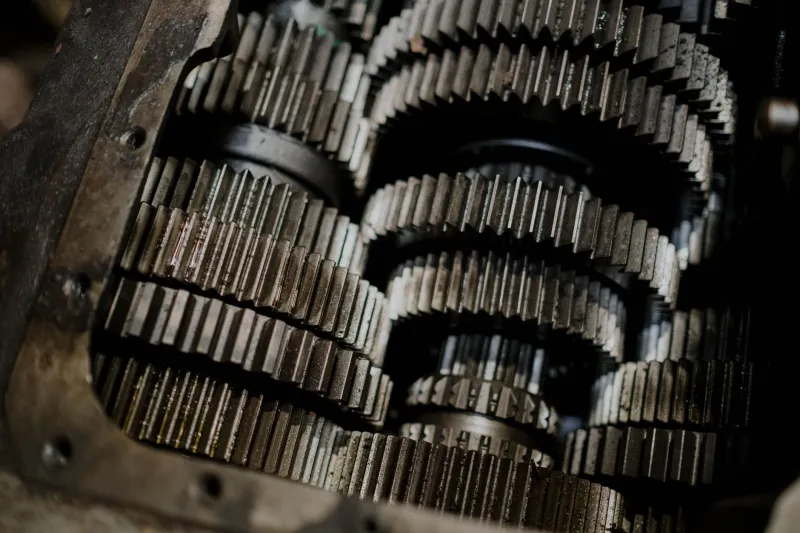
There's a particular kind of British engineering genius that doesn't much care for the spotlight. It doesn't do press conferences or parade laps. It sits in a well-lit workshop somewhere off the A43, smells faintly of gear oil and machined aluminium, and quietly makes the difference between a podium and a retirement. We're talking about the gearbox — and more specifically, the extraordinary cluster of British firms that build them better than almost anyone else on the planet.
While the world obsesses over aerodynamics and hybrid power units, teams from Germany, Italy, France, and beyond have been making a rather telling pilgrimage to the UK. Not to Silverstone or to the famous F1 campuses of Milton Keynes and Brackley — but to smaller, less celebrated addresses where specialist transmission engineers are rewriting the rulebook on how power gets from the engine to the tarmac.
The Invisible Advantage
Ask any serious racing engineer and they'll tell you the same thing: a gearbox isn't just a box of gears. It's a precision instrument that manages torque delivery, weight distribution, structural integrity, and — in modern motorsport — a staggering amount of data. Get it wrong and you're fishing gravel out of the barriers. Get it right and you've got a weapon nobody in the grandstand will ever see.
British firms have, over several decades, built up an almost unfair advantage in this space. The reasons are layered. The Formula 1 industry's long-standing home in the so-called 'Motorsport Valley' — that stretch of engineering excellence running through Oxfordshire, Northamptonshire, and beyond — created a talent ecosystem that extends well beyond the top flight. Experienced transmission engineers who cut their teeth on F1 projects have filtered outward into independent specialist companies, taking hard-won knowledge with them.
The result is a dense network of firms — some with fewer than 50 employees — that can design, simulate, manufacture, and validate a complete sequential transmission to a level that would embarrass many larger operations on the continent.
Who's Actually Doing It?
Without naming every player (some are deliberately low-profile for commercial reasons), the landscape includes a mix of established names and newer outfits punching well above their weight class.
Companies like Xtrac, based in Thatcham, Berkshire, have been a known quantity for years — their transmissions have featured in everything from Le Mans prototypes to rallycross machinery. But beyond the recognised names, there's a second tier of specialists operating across GT racing, touring car series, and single-seater championships who rarely make the trade press but are absolutely central to how European teams operate.
Several German GT outfits, for instance, have been quietly sourcing sequential gearboxes from British suppliers for the better part of a decade. Italian endurance teams have done the same. The logic is straightforward: British firms offer a combination of rapid prototyping capability, deep motorsport-specific experience, and — perhaps most importantly — a genuine willingness to work collaboratively with customer engineering teams rather than simply shipping a sealed unit and wishing them luck.
Brexit: A Bump, Not a Barrier
It would be dishonest to pretend the post-Brexit trading environment hasn't caused headaches. It absolutely has. Customs paperwork, delays at ports, additional certification requirements for components moving between the UK and EU — these are real friction points that have added cost and complexity to relationships that used to be frictionless.
And yet the European teams keep coming. That's the telling part.
The consensus from within the industry is that the quality differential is simply too significant to walk away from. One engineer working with a mid-level European endurance programme described it bluntly: the administrative hassle of dealing with UK suppliers post-Brexit is, in their words, 'annoying but manageable.' Switching to a continental alternative that can't match the technical output is, by contrast, 'a competitive problem we can't fix with paperwork.'
That's a remarkable endorsement when you think about it. Brexit was supposed to complicate Britain's role in European supply chains. In this particular corner of motorsport, it's largely been absorbed as a cost of doing business — because the product is simply that good.
The Innovation Pipeline
What keeps British transmission firms ahead isn't just experience — it's a culture of continuous development that's baked into how they operate. Many of these companies work across multiple series simultaneously, which means they're absorbing learnings from touring cars, sportscars, single-seaters, and rallying all at once. That cross-pollination of ideas is genuinely unusual and genuinely valuable.
Advanced manufacturing techniques — five-axis CNC machining, additive manufacturing for non-structural components, sophisticated FEA simulation — are now standard tools in even mid-sized British transmission shops. The gap between what's possible in a small UK specialist and what a large continental manufacturer can produce has narrowed dramatically on the manufacturing side. But the intellectual capital, the accumulated race mileage data, the hard-won understanding of failure modes under real race conditions — that's not something you can buy off the shelf or replicate quickly.
There's also a generational handover happening that's worth watching. A new cohort of engineers, many of them graduates of UK motorsport engineering programmes at places like Oxford Brookes or Cranfield, are entering these specialist firms and bringing fresh thinking on software integration, data analytics, and electrification. As hybrid and fully electric racing series expand, the question of how mechanical transmission design intersects with electric drivetrain architecture is becoming increasingly live — and British firms are already working on answers.
Why It Matters Beyond the Pitlane
This isn't just a story about racing. Britain's motorsport supply chain — of which transmission specialists are a crucial part — represents genuine high-value manufacturing and intellectual property generation. These aren't low-margin assembly jobs. They're skilled, well-paid engineering roles producing products that compete at the absolute frontier of mechanical performance.
At a time when the UK is searching for post-industrial identity and trying to define what 'made in Britain' means in a globalised economy, the gearbox is, oddly, a rather good answer. It's precision engineering. It's export-driven. It's built on decades of accumulated expertise that can't be easily replicated or offshored. And it wins races.
The European teams raiding British transmission factories aren't doing it out of loyalty or habit. They're doing it because the alternative is finishing second. And in motorsport, as in most things, nobody remembers second.
So next time you're watching a German GT car slice through a chicane or an Italian prototype hammer down the Mulsanne, spare a thought for the workshop somewhere in middle England where the thing connecting engine to wheel was designed, machined, and signed off by people who will never take a bow. That's British motorsport engineering in a nutshell — and it's rather magnificent.