Punching Above Their Weight: How Britain's Scrappiest Race Teams Are Beating the Big Boys
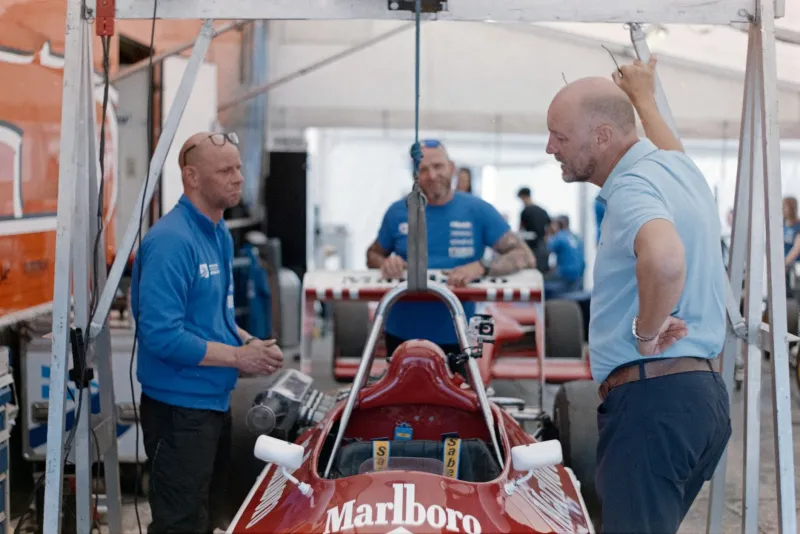
There's a particular kind of satisfaction that comes from watching a team operating out of a unit on a Coventry industrial estate outpace a rival with a gleaming multi-million-pound facility and a headcount that runs into the dozens. It happens more often than you'd think in British motorsport, and when it does, it tells you something important about where the real competitive edge actually lives.
The received wisdom has always been straightforward: more money equals more performance. Bigger budget, better parts, faster car. It's a logic that holds in plenty of walks of life. But British club and national racing has spent decades quietly dismantling that assumption, producing a steady stream of underdog operations that find ways to win — or at minimum, to embarrass — teams with far greater resources at their disposal.
So what's actually going on?
The Flexibility Factor
Ask anyone who's run a small team why they think they sometimes have an edge and you'll hear the same word crop up again and again: flexibility. When there are three of you making decisions rather than thirty, the time between spotting a problem and fixing it collapses dramatically.
Take a team like Sheffield-based outfit Apex Motorsport Development, which competes in the Britcar Endurance Championship. With a core crew of five — two of whom double up as drivers — they've been known to completely rethink their tyre strategy between sessions based on a hunch from the data, implement it, and be ready before their better-staffed rivals have finished their debrief. There's no committee. There's no sign-off chain. Someone makes a call and it happens.
Larger factory-backed teams, particularly those with manufacturer involvement, often carry the bureaucratic overhead of corporate structures. Decisions get escalated. Approvals get sought. By the time a strategy tweak has been greenlit, the window to exploit it has sometimes already closed. Small teams move like water — they find the gaps.
Necessity as the Mother of Invention
If flexibility is the first advantage, resourcefulness is the second — and arguably the more impressive one. When you can't simply throw money at a problem, you're forced to think around it. And thinking around problems, it turns out, is where genuine innovation tends to live.
One of the more striking examples in recent British motorsport history involves a privateer GT team that couldn't afford the data acquisition system their rivals were running. Rather than accepting the deficit, their engineer built a bespoke logging solution using open-source software and off-the-shelf sensors, at a fraction of the cost. Not only did it give them the data they needed — it gave them data in a format they'd designed themselves, meaning they actually understood it better than teams relying on expensive third-party systems.
That pattern repeats across disciplines. From hillclimb competitors fabricating their own suspension components to rally crews developing homemade intercom systems that outperform commercial equivalents, the ingenuity born of financial constraint has a long and proud history in British motorsport. It's not glamorous. But it works.
The Knowledge Retention Problem
Here's something that rarely gets discussed when people talk about factory team advantages: staff turnover. Big, well-funded operations attract talent, yes — but they also lose it. Engineers get poached. Mechanics move on to better-paid roles. With each departure, institutional knowledge walks out the door.
Small independent teams, by contrast, often maintain the same core group of people across multiple seasons. The engineer who built the car from scratch is still there three years later. The mechanic who found that weird gearbox issue at Donington in 2021 is still on the tools. That accumulated, specific knowledge of a particular car and its quirks is enormously valuable — and it's the kind of thing that doesn't show up in a budget spreadsheet.
At the sharp end of the Ginetta GT5 Challenge, you'll find teams that have been running the same driver-engineer pairing for four or five seasons. They've developed a shorthand that goes beyond data — a mutual understanding of how the car communicates its limits, what a particular handling complaint actually means in setup terms, and how to extract the maximum from a qualifying lap. That relationship takes years to build. You can't buy it in January.
When the Calendar Works in Your Favour
There's also a structural reality that often benefits smaller teams: they don't carry the overhead of a full-time operation. A factory squad needs to justify its existence year-round, which means headcount, premises, and costs that continue whether a car is on track or not. Independent outfits frequently operate on a campaign basis — scaling up for the season, scaling back in winter, keeping the burn rate manageable.
This leanness means that when a small team does have resource to spend, it tends to be concentrated precisely where it matters most. Rather than spreading budget thinly across a large organisation, they can go deep on the specific areas that will move the needle on laptime. It's targeted spending versus distributed spending, and in a sport where marginal gains decide championships, that focus can be decisive.
What the Big Boys Are Finally Learning
The interesting thing is that some of the lessons from the garage are starting to filter upward. Several British-based professional operations have in recent years deliberately created smaller, semi-autonomous sub-teams within their structures — essentially trying to replicate the decision-making speed of an independent outfit while retaining the resource base of a larger one. It's not always successful, but the fact that they're trying tells you something.
There's also a growing recognition among talent scouts that the engineers and mechanics who've cut their teeth in low-budget environments often arrive in top-level motorsport with problem-solving instincts that structured development programmes struggle to teach. The ability to diagnose a handling issue with limited data, to improvise a fix with whatever's in the van, to stay calm when everything's going sideways — that stuff is forged in the fire of genuine adversity.
The Spirit That Makes British Motorsport Tick
Ultimately, what the success of Britain's independent teams speaks to is something deeper than tactics or structure. It's the culture of the thing. British motorsport has always had a stubborn, slightly bloody-minded streak — a refusal to accept that outgunned means outclassed. From the kit car builders of the 1960s to the single-seater privateer heroes of today, the tradition of making something extraordinary from limited means runs through the sport like a thread.
The factory teams will keep spending. The budgets will keep growing. But as long as there are teams operating out of rented units, running on passion and ingenuity, the sport will keep producing moments that remind everyone why the underdog story never gets old.
And honestly? Long may it continue.