Circuit Guardians or Circuit Nannies? The AI Safety Revolution Dividing Britain's Racing Community
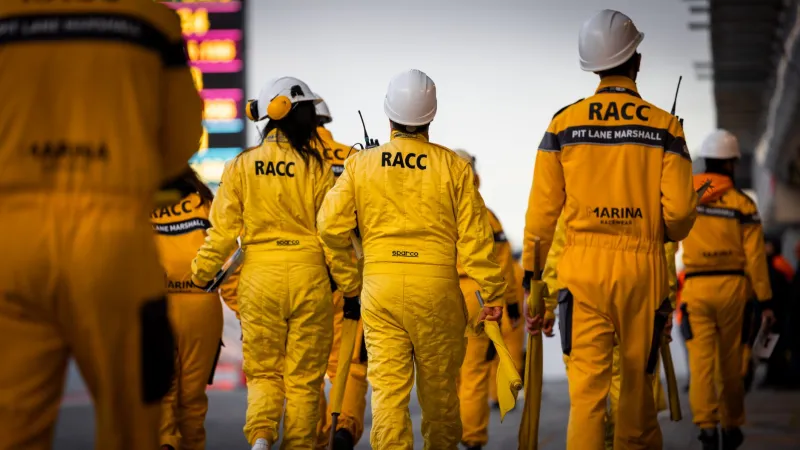
There's a particular kind of silence that falls over a racing circuit when something goes wrong. A split second of held breath before the yellows come out, before the radio crackles, before the machinery of safety kicks into gear. For decades, that machinery was human — eagle-eyed marshals, experienced race directors, gut instinct honed over thousands of race weekends. Now, increasingly, it's something else entirely.
At circuits across Britain, AI-powered incident detection systems are being installed, tested, and quietly rolled into operation. Cameras that can identify a car spinning before a human eye has processed the movement. Sensor arrays that flag debris on the circuit within milliseconds. Automated barrier systems that can stiffen or redirect impact forces based on real-time crash data. The technology is genuinely impressive. The reaction from the paddock, however, is decidedly mixed.
What the Systems Actually Do
It's worth being precise about what we're talking about, because the term 'AI safety system' gets thrown around loosely. At Brands Hatch and Donington Park — two circuits that have been at the forefront of these upgrades — the installations vary in scope but share a common architecture. High-definition cameras positioned at key marshal posts feed live footage into machine-learning models trained on thousands of hours of incident data. The system flags anomalies — a car travelling at unusual angles, a sudden deceleration, smoke — and alerts the control room in real time.
Some installations go further. Smart barriers equipped with pressure sensors and deformation monitoring can relay structural data during an impact, helping medical teams assess likely injury severity before they've even reached the scene. A handful of circuits are trialling automated lighting systems that can deploy warning signals faster than a marshal can physically wave a flag.
"The goal is always the same," explains one circuit safety officer who asked not to be named. "Close the gap between the moment something happens and the moment everyone on circuit knows about it. Every fraction of a second matters."
Hard to argue with that logic. And yet, argue people do.
The Drivers' Perspective
Speak to drivers across the British racing ladder — from Formula 4 rookies to seasoned GT competitors — and you'll encounter a spectrum of opinion that ranges from cautious scepticism to outright hostility.
"I understand why it's happening, I really do," says one club-level racer who competes regularly at Donington. "But there's something uncomfortable about a computer deciding when my race gets neutralised. What happens when it gets it wrong? What happens when it's too sensitive and throws out a safety car for a car that's just gone slightly wide?"
That concern about false positives is the most commonly cited frustration. Racing drivers are, by nature, a group accustomed to managing risk themselves. They've spent years developing the situational awareness to read a circuit, to spot a hazard, to adjust. The idea that an algorithm might override that judgment — or worse, interrupt a race based on a misread — rankles deeply.
There's also a philosophical dimension that several drivers raised unprompted. Racing has always carried inherent risk, and most competitors accept that as part of the deal. The question being asked in paddocks up and down the country is whether technology is genuinely making things safer, or whether it's creating an illusion of control that papers over the fundamental nature of the sport.
"If you take away all the risk, is it still racing?" one driver put it bluntly. "I'm not saying people should get hurt. But there's a line between safety and sanitisation, and I'm not sure everyone installing these systems knows where it is."
The Engineers' Rebuttal
The engineers and safety professionals behind these systems are well aware of the pushback, and they're not short of counterarguments.
"Drivers said the same thing about HANS devices. About mandatory roll cages. About every single safety innovation that's come along," points out a motorsport safety consultant who has worked with several British circuits on their AI integration projects. "And every time, within a few years, those same drivers couldn't imagine racing without them."
The data, where it exists, is compelling. Circuits that have implemented automated incident detection report measurably faster response times — in some cases shaving several seconds off the interval between an incident occurring and safety measures being deployed. In motorsport, seconds are everything.
There's also the question of marshal welfare, a dimension that often gets overlooked in these debates. Human marshals are extraordinary volunteers who accept considerable personal risk to make racing possible. Any technology that reduces their exposure to live traffic during an incident is, by most moral calculations, a straightforwardly good thing.
The Calibration Problem
Where the critics have a more substantive point is on the question of calibration — specifically, how these systems are tuned to balance sensitivity against specificity. An AI that flags every unusual movement will generate constant false alarms, eroding trust and potentially causing more disruption than it prevents. An AI calibrated too conservatively might miss the incidents it was designed to catch.
This isn't a theoretical concern. Several drivers who spoke to Motorsport Mad reported instances at circuits where automated warning systems had triggered during routine racing incidents — a car running wide at a fast corner, a minor contact that both drivers managed without issue — leading to unnecessary neutralisations that affected race outcomes.
"It's not that the technology is bad," one engineer within a British touring car outfit told us. "It's that it's still learning. The problem is that while it's learning, it's doing so in live race conditions, and that has real consequences for results, for championships, for livelihoods."
A Question of Ownership
Perhaps the deepest tension running through this debate is about ownership — specifically, who owns the decision to intervene in a race. Traditionally, that authority has rested with experienced human beings: the clerk of the course, the race director, the marshal team. These are people with judgment shaped by years of experience, capable of contextualising what they're seeing.
As AI systems become more integrated into circuit operations, that decision-making architecture is shifting. Not disappearing — the humans are still there, still nominally in charge — but changing in character. When a machine flags an incident and a human acts on that flag within milliseconds, who is really making the call?
It's a question that circuits and governing bodies are going to have to answer clearly, and soon. Because drivers will accept a lot of things in the name of safety. What they won't accept — what no competitor in any sport ultimately accepts — is the feeling that the contest has been taken out of their hands.
The circuits installing these systems believe they're building a safer future for British motorsport. The drivers living with them aren't so sure the trade-off is as straightforward as the tech evangelists claim. Somewhere between those two positions lies the real story — and it's one that's only just getting started.