Raw Talent, Real Risk: Inside the Nerve-Wracking World of British Motorsport's Driver Scouts
There's a moment every talent scout knows well. You're standing at the barrier of some windswept circuit — Croft, Thruxton, maybe a rain-soaked Snetterton — watching a kid in a rental helmet throw a Formula Ford into a corner about 15 miles per hour faster than anyone else on the grid. Your stomach does a little flip. Is this the one?
It might be. It might also be someone who'll plateau in Formula 4, burn through a family's life savings, and never get within sniffing distance of a professional seat. The terrifying truth is, in that moment, nobody really knows.
This is the world of British motorsport talent acquisition. It's unglamorous, frequently heartbreaking, and absolutely central to keeping Britain at the sharp end of global racing. And right now, the stakes have never been higher.
The Pressure Cooker of Early Identification
British motorsport has always prided itself on producing world-class drivers. The numbers are genuinely staggering — this country has punched so far above its weight for so long that it almost feels routine. But the pipeline that produces those champions is under pressure like never before.
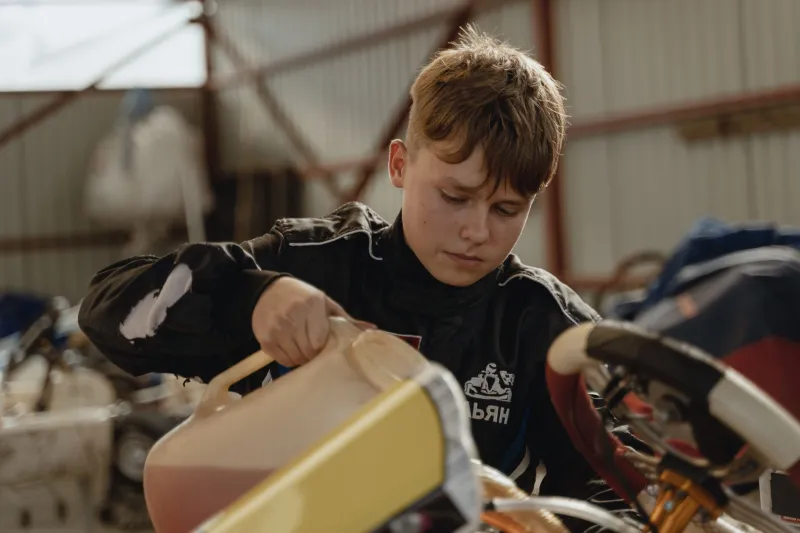
The window for identifying talent has compressed dramatically. Teams and academies are now looking at drivers as young as 12 or 13, fresh out of karting, trying to project what they might look like in a single-seater at 19. "You're essentially asking someone to predict the future based on a handful of kart races and a fifteen-minute conversation," says one team principal who asked not to be named. "The margin for error is enormous, and the consequences of getting it wrong are very real."
The financial stakes have risen in lockstep with the ambition. A proper driver development programme — covering testing, coaching, simulator time, and championship entry fees — can run anywhere from £150,000 to well over half a million pounds per year, depending on the category. For smaller British outfits operating on tight budgets, that's not a speculative investment. That's the whole shop.
What Scouts Are Actually Looking For
Ask a dozen different scouts what they're looking for and you'll get a dozen different answers. But scratch the surface and certain themes emerge consistently.
Raw pace is almost taken for granted at this level — if a driver isn't quick, the conversation ends quickly. What separates the prospects from the also-rans, the real talent spotters will tell you, is everything that surrounds the lap time.
How does a driver respond to adversity? Do they crumble when a rival edges them off the road, or do they process it, adapt, and come back faster? How do they communicate with engineers — are they articulate about what the car is doing, or do they just shrug and say "it felt a bit weird"? And crucially, what's their mental architecture like under pressure?
"The technical side of driving, you can coach," explains a development coach who works with several junior single-seater programmes across the UK. "The mental resilience, the self-awareness, the ability to stay rational when everything's going sideways — that's much harder to teach. You're either wired that way or you're not. And figuring out which is which, very early on, is the whole job."
There's also an increasing focus on what might be called the 'off-throttle' package — how a driver presents themselves, how they engage with sponsors, how they handle media. In an era where a driver's social media profile can genuinely influence commercial decisions, the complete picture matters more than ever.
The Academy Model and Its Discontents
The factory-backed academy has become the dominant model for driver development at the top end of British motorsport. Red Bull's programme is the most famous globally, but domestically, teams across the championship ladder have built their own versions — some impressively resourced, others rather more modest in ambition.
The theory is sound: identify promising talent early, wrap them in professional support, control their development trajectory, and reap the rewards when they graduate to your senior programme. In practice, it's considerably messier.
Drivers who looked exceptional at 14 sometimes stall completely by 17. Others who seemed ordinary early on suddenly click and accelerate past everyone around them. Injuries derail carefully constructed timelines. Family circumstances change. A rival team makes a better offer. The variables are endless, and no academy, however well-resourced, has cracked the code entirely.
There's also a growing conversation about what these programmes cost the drivers themselves — or rather, their families. Britain's junior motorsport scene remains largely pay-to-play, and even academy-supported drivers often contribute significant personal funding. Critics argue this creates a structural bias towards wealthy backgrounds that has nothing to do with talent. It's a tension the sport has never fully resolved.
The Gambles That Paid Off — and Those That Didn't
For every success story — and British motorsport has plenty — there are quieter tales of promising careers that never quite ignited despite serious investment and genuine belief from the people backing them.
Team principals are understandably reluctant to discuss the misses publicly. But in private, most will admit to at least one driver they were absolutely convinced about, who simply didn't develop as expected. "You back your judgement, you commit the budget, you give them every opportunity," says one veteran of the British single-seater scene. "And sometimes it just doesn't happen. That's the hardest part of this job."
The flip side, of course, is the occasional discovery that vindicates everything. The driver nobody else was watching who suddenly lights up a timing screen and never looks back. Those moments are what keep the scouts coming back to cold, grey circuits on a Sunday morning, stopwatch in hand.
Where British Talent Spotting Goes Next
The tools available to talent scouts are evolving rapidly. Data telemetry that was once the exclusive preserve of top-tier professional teams is now accessible at junior level, giving coaches and evaluators a far more granular picture of a driver's technique than raw lap times alone can provide. Simulator assessment has become a standard part of the evaluation process at serious academies. Some programmes are even exploring psychometric testing as part of their selection criteria.
But for all the technology, the people who've spent careers doing this job will tell you the fundamentals haven't changed. You still have to watch the driver. You still have to talk to them. You still have to make a call based on incomplete information, knowing full well you might be wrong.
British motorsport's extraordinary track record of producing world-class talent isn't an accident. It's the product of a vast, mostly invisible network of passionate, knowledgeable people making educated bets on young drivers, race after race, season after season.
Some of those bets will pay off spectacularly. Others will quietly disappear from the record books. But without the people willing to take the gamble in the first place, the pipeline dries up, and Britain's place at the top table of global motorsport gets a little less secure.
The grid's greatest gamble, it turns out, starts long before lights out.