The Silverstone Effect: How Britain Became the Undisputed Factory Floor of Formula 1
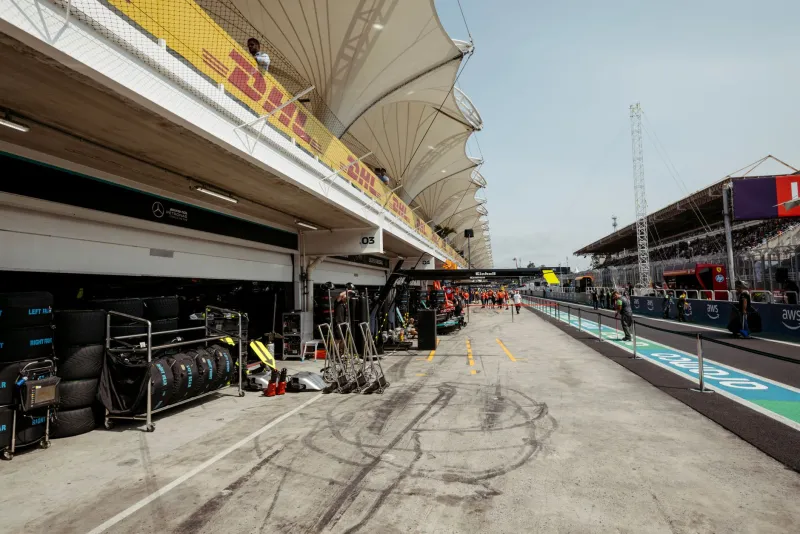
Draw a circle of roughly 80 miles around Silverstone and you've essentially mapped the nerve centre of the entire Formula 1 world. Mercedes in Brackley. Red Bull in Milton Keynes. Aston Martin in Silverstone itself. Williams in Grove. McLaren down in Woking. Ferrari may wave the Italian flag, but even they've got significant UK-based technical operations. It's a concentration of expertise so dense it almost feels unfair — and the rest of the paddock is starting to feel the pinch.
So how did this happen? And more pressingly, can anyone outside Britain's so-called 'Motorsport Valley' do anything about it?
The Talent Conveyor Belt Nobody Talks About
Walk into any aerodynamics lab, composites facility, or simulation suite at a top F1 team and you'll find a workforce that's been quietly assembled over decades. The University of Oxford, Cranfield, Loughborough, and Bath have long fed graduates directly into the sport's technical departments. These aren't just capable engineers — they're people who grew up obsessed with racing, who did their dissertations on CFD modelling, and who've been angling for an F1 job since their A-levels.
What's particularly clever about the British setup is the osmosis between teams. Engineers move between outfits, carrying institutional knowledge with them. A suspension specialist who spent five years at Red Bull might spend the next five at Aston Martin. The ideas circulate. The standards stay high. It's an ecosystem that self-reinforces in a way that's genuinely difficult to replicate from scratch.
"There's a culture here that you can't just build overnight," one senior technical director — speaking off the record — told us. "It's not just about hiring smart people. It's about the fact that those smart people grew up around this stuff. They understand the rhythm of a race weekend in their bones."
The Infrastructure Advantage
Beyond the human element, the physical infrastructure underpinning UK-based teams is staggering. In the last decade alone, Mercedes, Red Bull, and McLaren have collectively invested hundreds of millions of pounds into new wind tunnels, simulator technology, and factory expansions. Aston Martin's gleaming new campus at Silverstone — opened in 2023 — is arguably the most advanced F1 facility ever built.
This isn't just about having shiny buildings. Modern F1 car development is an iterative, data-intensive process that demands constant testing and refinement. When your wind tunnel is ten minutes from your design office, you can run a concept on a Monday morning and have meaningful data shaping your next CAD iteration by Tuesday afternoon. Teams operating out of other countries face logistical hurdles that, while not insurmountable, consistently add friction to the development cycle.
The supplier network compounds the advantage further. Want a bespoke titanium fastener machined to tolerances measured in microns? There are half a dozen specialist firms within an hour of Silverstone who can turn that around in 48 hours. That kind of supply chain intimacy is worth more than most people outside the paddock appreciate.
What the Challengers Are Doing
Ferrari, Haas, and Alpine are acutely aware of the gap — and they're not sitting still. Ferrari's significant investment in its Maranello facilities has been well-documented, and the Scuderia's recruitment of British-trained engineers has been notably aggressive in recent years. There's a certain irony in Italy's most iconic team headhunting talent from the very ecosystem that's been outpacing them.
Alpine's situation is perhaps the most instructive. The French manufacturer has been caught in a painful transition, shuffling technical leadership and debating how much of their operation should be consolidated in Enstone — their UK base — versus Viry-Châtillon in France. The internal tension between national pride and competitive pragmatism is real, and it's cost them.
Haas, meanwhile, leans heavily on a partnership model, effectively outsourcing much of their technical development to Dallara in Italy and drawing on Ferrari's power unit expertise. It's a pragmatic approach for a small team, but it caps their ceiling.
The Next Decade: Can Anyone Close the Gap?
The honest answer is: probably not quickly. The advantage Britain holds isn't just financial or infrastructural — it's cultural and generational. You can build a factory in six months. You can't build a forty-year tradition of motorsport engineering in the same timeframe.
That said, the FIA's cost cap regulations, introduced in 2021 and progressively tightened since, are the most significant equalising force the sport has seen in years. When every team is working within the same financial constraints, the marginal gains from having a slightly better supplier on your doorstep diminish. The question is whether that levelling effect will be enough to meaningfully shift the constructor standings — or whether the teams already at the top will simply find smarter ways to spend the same amount of money.
Our money's on the latter, at least for the next five years. The British teams have too much embedded advantage, too much institutional momentum. But beyond 2030? With AI-assisted design tools democratising some of the expertise that once required a Cranfield PhD, and with significant investment flowing into Asian and American motorsport infrastructure, the landscape could look genuinely different.
For now, though, the Motorsport Valley reigns supreme. And frankly, as British racing fans, it's hard not to feel just a little smug about that.