Ditching the Dotted White Line: Why Britain's Rising Racers Are Going Off-Piste
There's a particular kind of frustration that comes with watching your motorsport career stall on a tarmac circuit. You've done the karting. You've scraped together the budget for a Formula Ford season. You've smiled politely at the right people in the right hospitality suites. And yet the ladder just keeps stretching upward, each rung costing more than the last, with no guarantee the next one is even reachable.
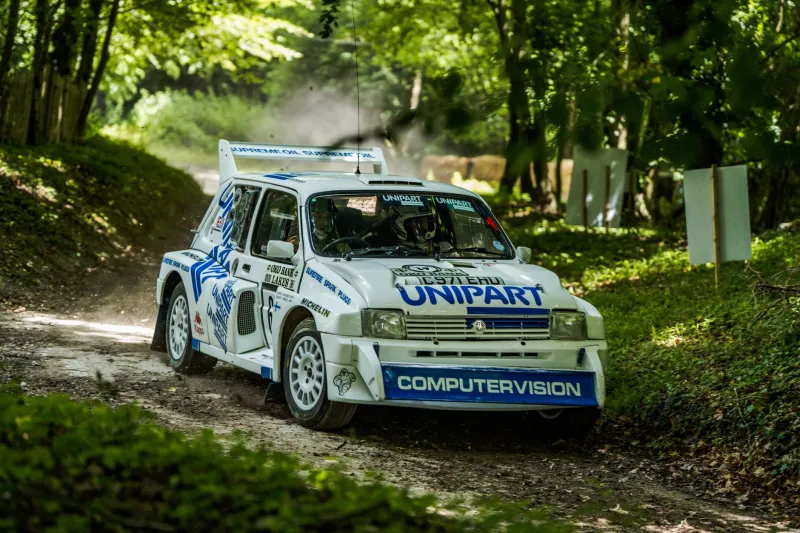
For a growing number of British racing talents, the answer isn't to keep climbing. It's to find a completely different ladder altogether — one made of gravel, mud, and gloriously unpredictable terrain.
The Great Escape from Circuit Racing
Ask around the paddocks at any British Rally Championship event or ARX-style rallycross meet and you'll hear variations of the same story. Drivers who spent years in single-seaters or tin-tops, quietly brilliant but chronically underfunded, who eventually looked sideways at the dirt disciplines and thought: why not?
It's not a new phenomenon, exactly. Britain has always had a rich rally heritage — the RAC Rally alone carved its name into motorsport folklore. But what feels different now is the profile of the people making the switch. We're not just talking about club-level competitors looking for a cheaper weekend out. Engineers who've worked in junior single-seater series are moving across. Data analysts who cut their teeth on aerodynamic packages are applying their skills to suspension setup on gravel. Even some drivers with genuine junior formula pedigree are quietly reassessing the traditional route.
The reasons aren't hard to find once you start looking.
The Cost of Tarmac Dreams
Let's be blunt about the economics. A competitive season in Formula 3 — still several rungs below Formula 1 — can cost upwards of £400,000. British GT is a touch more accessible but still demands a substantial budget and, increasingly, a manufacturer relationship that takes years to cultivate. Even the grassroots end of circuit racing has seen costs creep up, with tyres, testing restrictions, and ever-more-sophisticated data systems eating into the budgets of ordinary families trying to support a talented kid.
Rallying and rallycross, by contrast, offer something different. You can build a competitive rally car from a road-going base. The regulations in many classes actively encourage resourcefulness rather than punishing it. A family with mechanical nous and a decent workshop can genuinely compete — not just turn up and make up the numbers, but actually fight for results.
That accessibility isn't just financial, either. It's cultural. Off-road disciplines have a different atmosphere to the manicured world of circuit paddocks. There's more banter, more shared problem-solving between rival crews, more of the authentic spirit that drew people to motorsport in the first place.
The Skill Set Argument
Here's something that surprises people outside the sport: the technical demands of rallying and rallycross are, in many ways, more complex than circuit racing, not less. A rally driver has to read a road they've never driven at full speed, process pace notes under enormous pressure, and manage a car that might be handling completely differently from one stage to the next as conditions change. There's no run-off, no second chance, and absolutely no data from a previous lap to lean on.
For engineers, the challenge is equally rich. Setting up a car for a mixed-surface rally — where you might go from dry tarmac to wet gravel to a flooded ford within a single stage — requires a different kind of creative thinking to optimising lap time on a circuit you've got three days of testing data for.
Several engineers we spoke to for this piece described the move into off-road disciplines as professionally liberating. One former junior single-seater engineer, who now works with a leading British rally team, put it plainly: "On a circuit, everything is about refinement. Here, you're genuinely problem-solving every single weekend. It keeps you sharp in a way that's hard to describe until you've experienced it."
What the Next Generation Actually Wants
Spend any time talking to young motorsport enthusiasts — the ones actually coming through clubs and junior championships right now — and a pattern emerges. They grew up watching rallycross on TV and rally stages on YouTube. They've seen Ken Block's Gymkhana videos more times than they can count. They follow Ott Tänak and Thierry Neuville with the same fervour their predecessors reserved for F1 drivers.
For this generation, the dirt isn't a consolation prize. It's the destination.
There's also something authentically countercultural about it. At a time when Formula 1 has never been more polished, more corporate, and — whisper it — more scripted in its storytelling, the raw unpredictability of a forest stage or a rallycross joker lap feels genuinely exciting. Anything can happen. Anyone can win. The sport rewards courage and creativity rather than just budget and political connections.
That's a compelling proposition for a generation that's grown up watching junior formula racing effectively become a pay-to-play system.
Should Circuit Racing Be Worried?
The honest answer is: a little bit, yes.
Britain's circuit racing infrastructure remains world-class. The BTCC is a brilliant series. The British GT paddock produces superb racing. Club-level circuit competition is still thriving in ways that should make anyone who loves the sport proud.
But if the sport is quietly haemorrhaging talented people — not because they failed, but because they made a rational choice — then it's worth asking some hard questions. Are the economics genuinely sustainable at junior level? Is the culture welcoming enough to retain people who don't come with family money? Does the ladder actually lead somewhere, or does it just lead to another ladder?
The off-road disciplines haven't solved all of these problems. Rallying at the top level is expensive too, and the route to a World Rally Championship drive is no easier than the route to Formula 1. But the culture at every level below the summit feels different — more inclusive, more inventive, more honest about what motorsport is supposed to be.
The Dirt Is Calling
There's a moment in every rally stage — usually somewhere between the flying finish and the end of the road section — where a driver is just a person and a machine, completely alone with the challenge. No pit wall radio chatter, no DRS zones, no strategic tyre games. Just speed, skill, and whatever the road decides to throw at you next.
For a generation of British motorsport talent that's grown tired of the transactional grind of the traditional circuit racing ladder, that moment of pure, unmediated competition is increasingly irresistible.
The tarmac isn't going anywhere. But the dirt is calling — and more people are answering than ever before.