Black Gold and Black Art: The British Tyre Brains Quietly Winning Races Across Europe
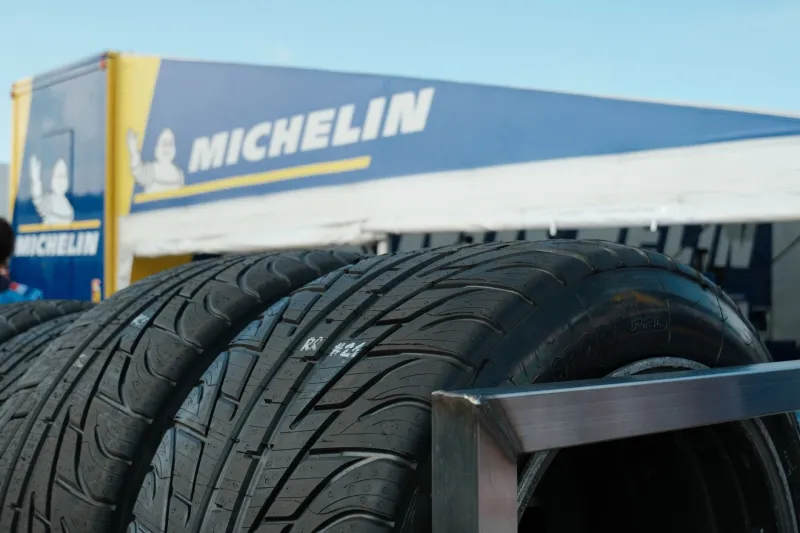
There's a moment in almost every race weekend — somewhere between the last practice session and the first qualifying run — when a small group of people huddle around a laptop, scrolling through numbers that most drivers wouldn't understand and most spectators will never see. These aren't strategists. They're not race engineers. They're tyre specialists, and in British motorsport, they are arguably the most undervalued competitive weapon on the grid.
The UK has long been celebrated as the spiritual home of motorsport engineering — the so-called 'Motorsport Valley' corridor stretching through Oxfordshire, Northamptonshire, and beyond has spawned more world-championship-winning technology than anywhere else on earth. But within that ecosystem, one discipline has remained stubbornly invisible: tyre development. Not the manufacturing giants like Pirelli or Michelin, but the smaller, fiercely specialist British outfits who work in the gaps — advising teams, developing bespoke compounds, and translating raw rubber science into race-winning margins.
More Than Just a Bit of Rubber
Ask any serious race engineer what separates a podium finisher from a midfield runner and the answer is rarely the engine or the aerodynamics. It's the tyres. Specifically, it's understanding them — how they build heat, where they degrade, and crucially, how to manipulate those characteristics through compound selection, setup, and driving style.
"People think it's a dark art," says one compound development consultant who works across GT and touring car categories throughout Europe, speaking on condition of anonymity. "It's not. It's data science with a very aggressive timeline. You've got maybe three sessions to understand what a tyre is doing and build a picture that the team can actually act on. Get it wrong and you're fighting the car all weekend."
This is the world Britain has quietly dominated. Firms operating out of industrial estates in Warwickshire and converted farm buildings in rural Northamptonshire are producing tyre analysis software, bespoke testing rigs, and compound advisory services that are being used by teams from the Nürburgring 24 Hours to the French GT Championship. They don't advertise. They don't need to. Word travels fast in racing paddocks.
The Data Behind the Decisions
Modern tyre engineering is as much about software as it is about chemistry. The shift towards data-driven compound selection began in Formula 1 and has trickled down through the categories at pace. British firms have been particularly adept at commercialising that knowledge transfer — taking tools developed for the pinnacle of the sport and making them accessible (and affordable) for teams operating on a fraction of the budget.
One UK-based startup, founded by a pair of former F1 tyre engineers, has developed a predictive degradation model that's now being used by multiple teams in the European Le Mans Series. The model ingests telemetry data in real time and cross-references it against a library of historical compound behaviour to predict degradation curves with what the founders claim is over 90% accuracy across a stint.
"The teams we work with aren't paying for tyre advice," one of the founders explains. "They're paying for certainty. In a three-hour race, knowing you can push two laps longer than your competitors before the front-left goes off — that's worth more than a tenth of a second in qualifying."
It's a compelling pitch, and clearly one that's landing. The firm, which launched just four years ago, now has clients in six countries, all of them reached through paddock recommendation rather than any formal marketing.
The Compound Crafters
Beyond the data side, there are British specialists working directly on rubber chemistry — not manufacturing tyres from scratch, but advising on compound selection and working with manufacturers to develop category-specific solutions. This is perhaps the most secretive corner of the industry.
Several sources within the British Touring Car Championship paddock confirm that at least two teams have used independent British tyre consultants to influence their setup philosophy in recent seasons — not breaking any rules, but finding legal marginal gains through a deeper understanding of the control tyre's behaviour at different temperatures and pressures.
"Everyone's using the same rubber," admits one veteran BTCC crew chief. "The difference is who understands it better. Some of these tyre guys can look at a wear pattern after six laps and tell you exactly where the car is losing energy. That's invaluable."
Why Britain Leads
The question worth asking is why this expertise has clustered in the UK. The answer, most insiders agree, comes back to the same factors that made Motorsport Valley a thing in the first place: proximity, culture, and an apprenticeship ecosystem that values practical knowledge over academic credentials.
Britain produces engineers who are comfortable getting their hands dirty. The country's club racing scene — one of the most active in the world — creates a constant pipeline of technically curious people who've learned to solve problems with limited resources. That instinct for pragmatic problem-solving translates exceptionally well into tyre engineering, where the theoretical and the practical are always in tension.
There's also the matter of geography. Being within easy reach of the major European racing hubs — Spa, Le Castellet, the Nürburgring — while maintaining the networking advantages of Motorsport Valley means British tyre specialists are always in the conversation.
The Next Generation
For an industry this secretive, it faces a surprisingly open challenge: succession. Several of the most respected names in British tyre consultancy are approaching retirement age, and the knowledge they carry isn't always written down.
"There's no degree course in tyre engineering," laughs one specialist who's been in the game for over three decades. "You learn by doing, by watching, by making mistakes on a Friday morning and fixing them by Saturday afternoon. The question is whether the next generation has the patience for that."
Some are cautiously optimistic. The rise of data science as a discipline has brought a new wave of analytically gifted graduates into motorsport, and the best of them are gravitating towards tyre work. Whether they'll develop the same intuitive feel for the black stuff that their predecessors built over careers of trackside experience remains to be seen.
What's certain is that as long as motorsport runs on rubber, the quiet Britons who understand it best will be in demand — even if nobody outside the paddock ever learns their names.