Resting Champions: The Extraordinary Second Lives of Britain's Most Iconic Racing Cars
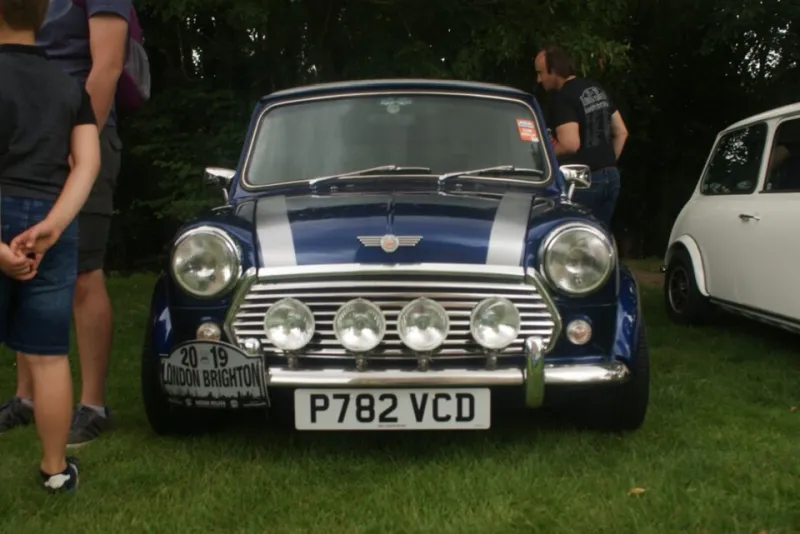
Photo: Robert Lamb , CC BY-SA 2.0, via Wikimedia Commons
The last lap is never really the last lap. For a racing car, the end of competition is rarely the end of the story — it's more like the beginning of a different, stranger, and sometimes equally dramatic chapter. Britain has produced more significant racing cars than almost any other nation on earth, and what happens to them after the chequered flag falls for the final time says as much about our relationship with motorsport history as anything that happened on track.
The Barn Find Fantasy
Every enthusiast harbours the dream. You're poking around a farm clearance in Somerset, or bidding on the contents of an old workshop near Coventry, and there it is — lurking under a tarpaulin, caked in decades of agricultural dust, recognisable despite itself. A genuine piece of racing history, forgotten by time and circumstance.
It happens more than you'd think. Britain's long motorsport heritage means that significant machinery ended up in surprising places when the money ran out or the owners moved on. A Lotus Formula Ford from the early seventies spent fifteen years in a Hertfordshire garage before being identified by a specialist restorer who happened to notice the chassis number. A period-correct works Mini Cooper S with genuine competition history sat in a Shropshire barn for over two decades, its significance apparently unknown to the family who inherited it.
The barn find narrative has a romantic pull, but the reality is often less cinematic. Cars stored improperly for decades suffer grievously — corrosion, vermin damage, degraded rubber and fluids, missing components replaced with whatever was to hand at the time. The discovery is just the beginning of a process that can take years and cost more than the car's market value to complete properly.
The Restorers' Art
Britain is home to some of the world's finest historic racing car restorers, and their workshops are cathedrals to a very particular kind of obsession. Places like Hall & Hall in Leyburn, or the various specialists clustered around the Oxfordshire motorsport corridor, handle machinery that represents the physical memory of races won and lost decades ago.
The philosophy of restoration is itself a source of intense debate within the community. Purists argue for absolute period correctness — every nut, bolt, and cable tie returned to its original specification, using original parts where possible and faithful reproductions where not. Others take a more pragmatic view, accepting that a car which can be safely and reliably demonstrated is more valuable to the sport's heritage than one that's technically correct but too fragile to run.
"There's no universal answer," admits one restoration specialist who has worked on multiple British championship-winning cars over a thirty-year career. "Every car has a different story and different stakeholders. Some owners want a static display piece. Some want to drive it at Goodwood. Some want to race it in a historic series. The restoration approach has to serve the intended purpose, and those purposes are genuinely different."
The cost of a proper restoration on a significant British racing car — a genuine works entry from a major manufacturer, say, or a proven championship winner — can run well into six figures. For the rarest and most historically significant machines, considerably more. It's an act of love as much as investment, and the people who commission such work are rarely motivated primarily by financial return.
Museums, Collections, and the Question of Access
Britain's motorsport museums represent some of the finest collections of racing heritage anywhere in the world. Donington Grand Prix Collection, the British Motor Museum at Gaydon, the National Motor Museum at Beaulieu — these institutions hold machines that shaped the sport's history and attract visitors who understand what they're looking at.
But there's a tension built into the museum model. A car behind a rope barrier, polished to perfection under artificial lighting, is simultaneously preserved and somehow diminished. The essence of a racing car — its noise, its violence, its barely contained energy — is absent. You can see it, but you can't hear it, and for many enthusiasts, the hearing is everything.
The Goodwood Revival and Festival of Speed have done more than perhaps any other events to resolve this tension, at least temporarily. Watching a genuine Jaguar D-Type being driven with genuine commitment through the chicane at the Revival isn't just nostalgia — it's a visceral reminder of what these machines were built for. The argument that a car is better heard than merely seen has real force when you're standing at the barrier with the sound washing over you.
Historic Racing's Unlikely Boom
The growth of historic racing in Britain has created a remarkable phenomenon: race cars that competed forty or fifty years ago are now back on track, sometimes against similarly historic machinery, sometimes in dedicated period-correct championships. The Historic Sports Car Club, the HSCC, runs a calendar that would make many a modern series envious for depth of quality and historical significance.
For some cars, this represents a genuine second competitive life. A Formula Three car that raced at Thruxton in 1972 might now be contesting a historic F3 championship, driven by an enthusiast owner who treats the machine with a reverence that the original works team probably didn't have time for. The care lavished on these cars is extraordinary — pre-event preparation that would shame many contemporary teams, post-race inspections that leave nothing to chance.
There are risks, of course. Historic racing isn't without incident, and when a genuinely irreplaceable piece of machinery is involved in contact or mechanical failure, the consequences extend beyond the immediate damage. Spare parts that no longer exist. Components that cannot be replicated. History that cannot be undone.
Preservation or Participation — A False Choice?
The debate between those who believe significant racing cars should be preserved immaculately and those who argue they should be driven tends to generate more heat than light. In practice, the most thoughtful custodians recognise that both impulses are valid and that the answer usually lies somewhere between them.
A car that runs occasionally, at appropriate events, under careful supervision, with proper preparation and maintenance, isn't being damaged — it's being honoured. Equally, a car so significant that its survival in original condition represents an irreplaceable historical record deserves the protection of a museum environment.
What matters, ultimately, is that the decision is made consciously, by people who understand what they're custodians of. Britain's racing heritage belongs, in a meaningful sense, to all of us — to the sport's history, to the fans who watched these cars race, to the engineers who built them and the drivers who risked everything in them.
The last lap was never really the last lap. It was just the beginning of a different kind of race — against time, against indifference, against the slow forgetting that threatens every chapter of history that isn't actively defended.
Thankfully, Britain has no shortage of people willing to fight it.