From Bedroom to Barriers: The British Gamers Turning Sim Hours into Real Race Seats
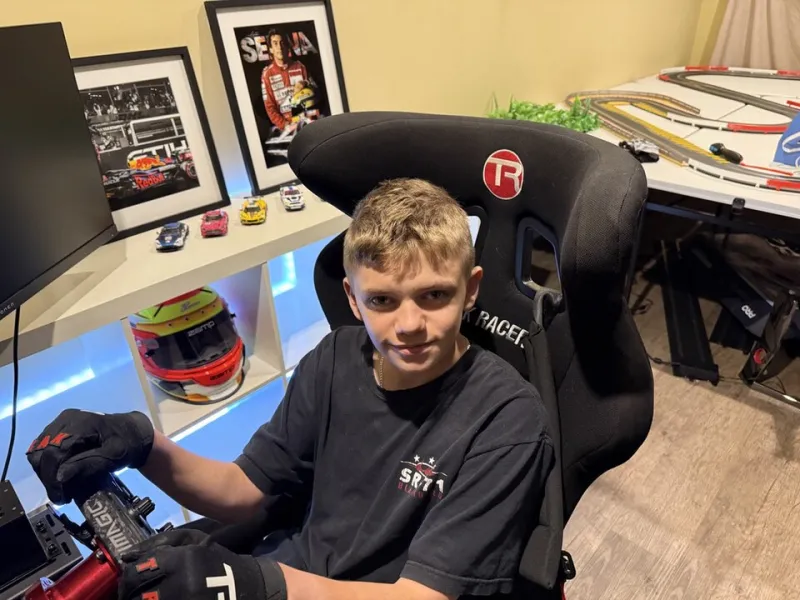
Photo: SpaceFreeq, CC BY-SA 4.0, via Wikimedia Commons
Not long ago, telling your parents you were going to make it in motorsport by playing video games in your bedroom would've earned you a very specific kind of look. Somewhere between pity and mild concern. But in 2024, that conversation is happening in reverse — teams are knocking on the doors of esports champions, chequebook in hand, asking if they fancy a proper go.
Britain's sim racing scene has quietly evolved from a hobbyist pastime into a legitimate talent pipeline, and the motorsport establishment — never the quickest to embrace change — is finally catching up.
The Numbers Don't Lie
The iRacing British circuit servers alone host tens of thousands of registered UK users. Assetto Corsa Competizione has become the unofficial training ground for a generation of drivers who've never sat in a kart but can nail a perfect lap of Brands Hatch in their sleep. And platforms like the F1 Esports Series have started producing graduates who've gone on to test real machinery with professional outfits.
Jordan Shepherd, who won the F1 Esports Pro Series with Renault back in 2018, is perhaps the most high-profile British example of the sim-to-real crossover. His subsequent appearances in real single-seaters weren't just novelty PR exercises — they demonstrated that the muscle memory built over thousands of virtual hours translates in ways that even seasoned motorsport coaches found surprising.
But Jordan's story is just the headline. Beneath it, there are dozens of lesser-known British sim racers quietly making the same journey at grassroots level.
"The First Time the Barrier Felt Real"
We spoke to 22-year-old Callum Dyer from Coventry, who spent four years competing in online leagues before landing a scholarship drive in a Ginetta Junior championship. His account of the transition is illuminating.
"The biggest shock wasn't the speed," he tells us. "I'd done enough sim hours that the pace felt familiar. It was the physical stuff — the G-force through Copse, the way the car moves under braking when you can actually feel it through your spine. No force feedback wheel prepares you for that. But the racecraft? The spatial awareness, the ability to read a race situation? That came naturally because I'd been doing it for years."
His team principal, who runs a small but increasingly successful outfit out of the Midlands, admits he was sceptical when his data engineer first suggested scouting sim leagues. "I thought it was daft, honestly. But we gave Callum a test day and within six laps he was within a second of our benchmark. A kid who'd never properly raced before. It changed my thinking completely."
Teams Are Paying Attention
It isn't just small outfits either. Several British teams competing in BTCC support series have begun formally monitoring esports leaderboards as part of their talent identification process. One team manager — who asked to remain anonymous — told us they now treat sim performance as a legitimate pre-screening tool before investing in a test day.
"Test days cost money. Fuel, tyres, circuit hire, engineer time — you're talking thousands before anyone's turned a wheel. If we can narrow the field by looking at someone's sim data first, that makes financial sense. And increasingly, the sim data is telling us something real."
The Porsche Esports Supercup and the GT World Challenge Esports series have both produced drivers who've subsequently found real-world backing. The pathway is becoming formalised in a way that would've seemed absurd a decade ago.
Where the Gap Still Exists
None of this is to say the transition is seamless. Every driver we spoke to was emphatic on one point: nothing replicates the psychological pressure of a real race start. When twenty cars are jostling for position at Thruxton and the consequences of a misjudgement are measured in carbon fibre and medical bills rather than a respawn screen, the mental game shifts dramatically.
"You can be the fastest person on any sim platform in the world," says performance coach and former racing driver Mike Tanner, who now works with several young British drivers making the crossover. "But managing your own adrenaline, dealing with the fear of contact, keeping your head when you've just spun in front of the entire field — that's a completely different skill set. The sim teaches you the track and the tactics. The real world teaches you yourself."
Physical conditioning is another gap. Sim racing demands remarkable hand-eye coordination and mental stamina, but it doesn't prepare your neck muscles for sustained lateral G-forces or your forearms for the kind of punishment a proper racing car dishes out over a full race distance.
A Legitimate Pathway, Not a Guaranteed One
The smart money isn't on sim racing replacing traditional pathways — karting, formula fords, the long slog up through the junior formulae. But it's increasingly clear that it's becoming a credible supplement to them, and in some cases a genuine shortcut for drivers with limited budgets.
For a generation priced out of karting from a young age — and the costs are eye-watering — sim racing offers something remarkable: access. A decent sim setup costs a fraction of a single race weekend in a junior series. The hours you can accumulate, the racecraft you can develop, the data you can analyse — it's democratising talent identification in a sport that has historically been the preserve of those with deep pockets.
British motorsport has always prided itself on finding and nurturing raw talent. If that talent is now emerging from a bedroom in Coventry rather than a kart circuit in Norfolk, perhaps the only sensible response is to open the door a little wider.
The barriers are real now. But so is the opportunity.