Behind the Screens: How Britain's Data Engineers Became Motorsport's Secret Weapon
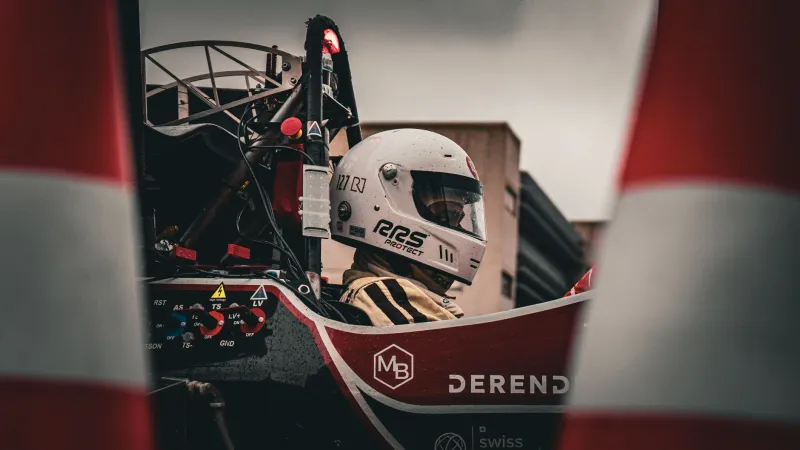
Picture the scene: somewhere in the Silverstone paddock, a race is unfolding at 180 miles per hour. The crowd's watching the cars. The cameras are watching the drivers. But the people actually deciding the outcome? They're hunched over laptops, eyes fixed on rivers of numbers that most of us couldn't begin to interpret.
British motorsport has always celebrated its drivers. It's always worshipped the engineers who bolt the cars together. But there's a third tribe — quieter, less glamorous, and arguably more influential than either — that's been steadily rewriting the rulebook on how races are won. The data engineers. And in 2024, they've never been more powerful.
The Numbers Behind the Noise
Modern race cars are essentially rolling supercomputers. A current Formula 1 machine generates somewhere in the region of 1.5 gigabytes of data per lap. That's not a typo. Every throttle input, every brake trace, every microscopic shift in tyre temperature — it's all captured, transmitted, and processed in real time by teams of analysts working in what can only be described as a high-stakes war room.
Britain sits at the centre of this revolution. Seven of the ten Formula 1 teams are headquartered within the so-called 'Motorsport Valley' — that remarkable cluster of engineering excellence stretching across Oxfordshire, Northamptonshire, and beyond. It's not just geography. It's talent density. The UK's universities, particularly Cranfield, Oxford Brookes, and Loughborough, have spent decades feeding highly trained engineers directly into motorsport's technical pipeline. The data revolution didn't happen despite Britain — it happened largely because of it.
"People think of data engineering as something that arrived with modern F1," says one senior performance analyst who's worked across multiple British championships. "But the foundations were laid by British engineers who'd been doing this kind of analytical work in aerospace and defence for years. Motorsport just gave them a faster, louder canvas."
Strategy Is the New Speed
Here's something that might surprise the casual fan: raw pace is rarely what separates winners from also-rans at the top level anymore. Strategy is. And strategy, increasingly, is built on data.
Undercut windows, tyre degradation models, fuel load calculations, safety car probability matrices — decisions that once lived in the gut of an experienced race engineer are now backed by predictive algorithms running thousands of simulations before the formation lap is even complete. During a race, those models update continuously, reshaping strategy calls with every passing sector.
The drama you see on the pit wall — the frantic headset conversations, the split-second tyre choices — is the visible surface of an enormous invisible architecture. The people building that architecture are the data engineers, and at the British outfits doing this best, they're treated as core competitive assets rather than technical support staff.
"There's a moment in every race where the data either confirms your instinct or contradicts it," explains one engineer who works in a British-based touring car programme. "When it contradicts you and you trust the data anyway — and it turns out to be right — that's when you understand why this stuff matters so much."
Not Just an F1 Story
It would be easy to file all of this under 'Formula 1 problems' and move on. But that would miss the point entirely. Data engineering is cascading down through the motorsport pyramid at remarkable speed.
British GT, the BTCC, even well-resourced club racing outfits are now employing dedicated data analysts or leaning on increasingly sophisticated software packages that put meaningful telemetry in the hands of teams who, a decade ago, would have been working purely from driver feedback and a stopwatch. Companies like Bosch Motorsport, MoTeC, and several British-developed software firms have democratised the tools without necessarily democratising the expertise to use them well.
That expertise gap is where the real competitive edge lives. Knowing that your rear-left tyre is running three degrees hotter than the model predicted is one thing. Knowing what to do about it — in real time, under pressure, with a race on the line — is something else entirely.
"The data doesn't make decisions," says one analyst working in a junior single-seater series based out of the Midlands. "People still make decisions. The data just makes sure those decisions aren't based on wishful thinking."
Growing the Next Generation
Britain's motorsport industry understands it needs to keep feeding the talent pipeline. Initiatives like the Motorsport Industry Association's career pathways programme and partnerships between racing teams and UK universities are creating structured routes into data-focused engineering roles that simply didn't exist fifteen years ago.
What's particularly encouraging is the breadth of backgrounds now entering the discipline. Physics graduates, computer scientists, even economists are finding their way into motorsport paddocks, bringing analytical frameworks from entirely different fields and applying them to racing problems with fresh eyes. The sport is richer for it.
There's also a growing recognition that diversity in this talent pool isn't just an ethical imperative — it's a competitive one. Teams that draw on a wider range of perspectives and problem-solving styles tend to find solutions that more homogenous groups miss. Britain's motorsport sector is slowly, if still imperfectly, beginning to reflect that understanding.
The Human Element
For all the processing power and algorithmic sophistication, the best data engineers will tell you that the human element hasn't been engineered out of the equation — it's just been repositioned.
The relationship between a driver and their data engineer is one of the most nuanced in sport. The driver brings sensory information that no sensor can fully replicate — feel, instinct, the almost telepathic understanding of what a car is about to do before it does it. The data engineer brings objectivity, pattern recognition across thousands of data points, and the ability to separate what a driver thinks is happening from what the telemetry proves is happening.
When that relationship works, it's genuinely extraordinary to watch. When it doesn't — when trust breaks down, or when data is misread, or when the human instinct and the algorithmic recommendation point in opposite directions — the consequences can be brutal.
"The best drivers want to understand the data," says one engineer. "They're not threatened by it. They use it to get better. The ones who resist it tend to plateau."
The Invisible Champions
British motorsport has always had a gift for producing people who are exceptional at things the outside world barely notices. The mechanics who can rebuild a gearbox in forty minutes. The aerodynamicists who find tenths in the most improbable places. The data engineers who see a race not as a spectacle but as a living, breathing dataset — and who know, sometimes before the driver does, exactly what's about to happen next.
They won't get the trophy. They won't get the interview. But make no mistake: in paddocks across Britain and around the world, the fastest hands in motorsport never once touch a steering wheel. They're typing.