Torque of the Town: The Backstreet Engine Builders Keeping Britain's Performance Cars Breathing
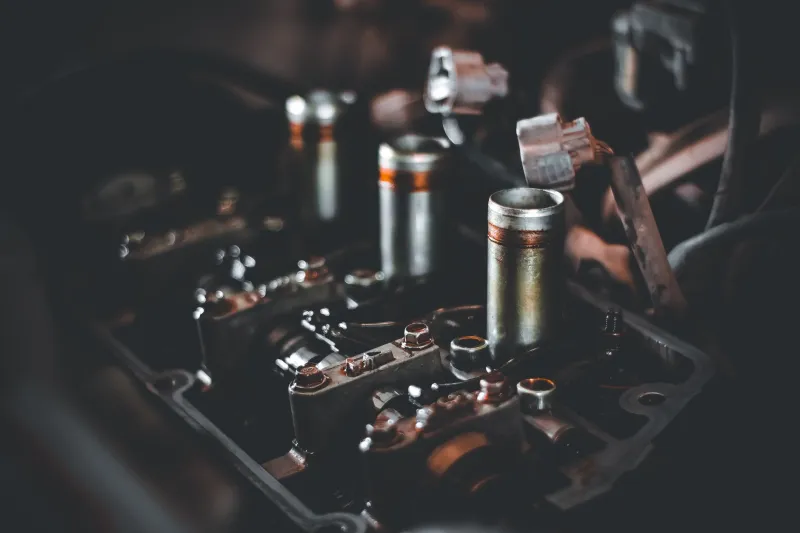
Pull up to most of them and you'd miss the significance entirely. A roller shutter door. A hand-painted sign. Maybe a dog asleep near the parts washer. But step inside and the smell hits you first — that particular cocktail of machining oil, gasket sealant, and decades of mechanical history — and you realise you're standing somewhere that genuinely matters to British motorsport.
These are the independent engine builders. And they're quietly fighting for survival.
A Craft Built on Calluses
Britain has always had a peculiar talent for engineering things that shouldn't, by rights, work as well as they do. From the back-bedroom development of the original Mini Cooper engine to the shed-built specials that dominated club racing in the 1970s and '80s, this country has a deep tradition of making mechanical magic on modest budgets. That tradition lives on in places like Worcestershire, County Durham, and the outskirts of Coventry — workshops where the lathes are older than some of their customers but the knowledge running them is irreplaceable.
Take a builder like those you'd find supplying engines to the Historic Formula Ford scene. They're not building to impress Instagram. They're building to exacting homologation specs, sourcing original Kent crossflow components that haven't been manufactured since Thatcher was in Downing Street, and doing it with the kind of precision that would embarrass some far larger operations. The tolerance margins they work to aren't just tight — they're obsessive.
"You can't fake it at this level," one Midlands-based engine reconditioner told us. "A road car engine, you've got wiggle room. A race engine, especially a formula car engine where everything is supposed to be equal, you've got none. Every thou matters. Every surface finish matters. You either know what you're doing or you don't."
The Parts Problem
If the craft itself is demanding, the supply chain is a nightmare. As older performance cars age out of mainstream parts availability, independent builders are increasingly forced to become archaeologists as much as engineers — hunting down new-old-stock components from warehouse sales, cannibalising donor engines, or having parts manufactured from scratch.
For Ford Pinto and BDA-derived engines, for the A-Series and its variants, for early Cosworth units, the official supply chain largely dried up years ago. What remains is a network of specialist suppliers, enthusiast-run stockists, and the occasional lucky barn find. Builders who've been in the game long enough have their contacts — the bloke in Belgium with a warehouse full of old Lotus components, the retired machinist in Lancashire who still makes bespoke con rods on request — but that knowledge isn't written down anywhere. It lives in phone books and memories.
The knock-on effect for motorsport is significant. Club racing series that rely on period-correct machinery — Formula Junior, Historic Touring Cars, the various classic single-seater categories — are entirely dependent on these builders keeping their stock of knowledge and components alive. When a workshop closes, it's not just a business that disappears. It's an entire ecosystem of expertise that goes with it.
Racing Teams in the Back Pocket
What's perhaps less well understood outside the motorsport bubble is how many active racing operations, even at semi-professional level, rely on small independents rather than in-house engine departments. The economics simply don't stack up for a lot of teams to run their own engine programme from scratch. Instead, they contract out — and often to workshops with fewer than a dozen employees.
British Touring Cars may have its factory-backed squads with sophisticated engine programmes, but further down the pyramid — in the Ginetta classes, in the various single-make championships, in the club racing categories that make up the vast majority of UK motorsport — the engine is often the work of one or two specialists who've spent thirty years learning exactly what makes a particular unit perform.
That relationship between racer and builder is something that doesn't translate easily to a corporate structure. It's personal. It's built on trust, on a shared language of dyno sheets and build sheets and late-night phone calls after a DNF. "He rang me at half ten on a Saturday night from Thruxton," laughs one builder we spoke to. "Blown a head gasket in qualifying. Wanted to know if I had a spare built up. I did, as it happens. That's just how it works."
The Succession Gap
Here's where things get genuinely worrying. The average age of an experienced independent engine builder in the UK is not young. The skills required — precision machining, metallurgical knowledge, an intuitive understanding of how an engine breathes and wears — take years to develop properly. And the apprenticeship pipeline that once fed these workshops has largely collapsed.
Modern automotive training is overwhelmingly focused on diagnostics, electronics, and increasingly, high-voltage systems. The traditional engine machinist — someone who can skim a head, hone a bore, and balance a rotating assembly — is becoming a rarity. Some colleges still teach elements of it, and a handful of dedicated workshops run their own informal apprenticeships, but the numbers are small.
Several builders we spoke to expressed genuine anxiety about what happens when they retire. Not just to their businesses, but to the knowledge itself. One has started keeping detailed written records of every build — tolerances, techniques, supplier contacts — specifically so that someone, someday, can pick up where he leaves off. "It's like trying to write down how to ride a bike," he admits. "You can get some of it down. But the feel of it? That takes years."
Adapting or Dying
The ones that are surviving are adapting. Some have moved into EV conversion work alongside their traditional engine business — a pragmatic pivot that keeps the lights on while they continue doing what they love. Others have leaned hard into the classic and heritage sector, where demand for quality rebuilds is actually growing as older performance cars appreciate in value and owners invest properly in their upkeep.
There's also a growing market in mild performance upgrades for road cars — the kind of carefully considered engine work that improves reliability and response without falling foul of insurance or emissions regulations. It's not glamorous, but it pays, and it keeps skilled hands busy.
What none of them are doing is giving up easily. There's a stubbornness to these people that's very British, very motorsport. The idea of walking away from something they've dedicated their working lives to because the industry moved on — that's not really in the vocabulary.
The Heartbeat Continues
Britain's motorsport identity is built on more than just the glamour of Formula 1 and Le Mans. It's built on the thousands of people operating at the edges — the marshals, the mechanics, the fabricators, and yes, the engine builders — who make the whole thing function. The workshops we're talking about aren't famous. They don't have sponsorship deals or social media managers. They have decades of experience, a waiting list of grateful customers, and engines that sing.
Next time you're at a club meeting and something roars past with that particular edge of mechanical fury, spare a thought for the person who made that possible. Chances are they're covered in oil in a unit somewhere off a ring road, doing something the mainstream industry forgot how to value.
Long may they keep turning wrenches.