Cold Blood, Hot Laps: The Secret World of Britain's Winter Ice Racers
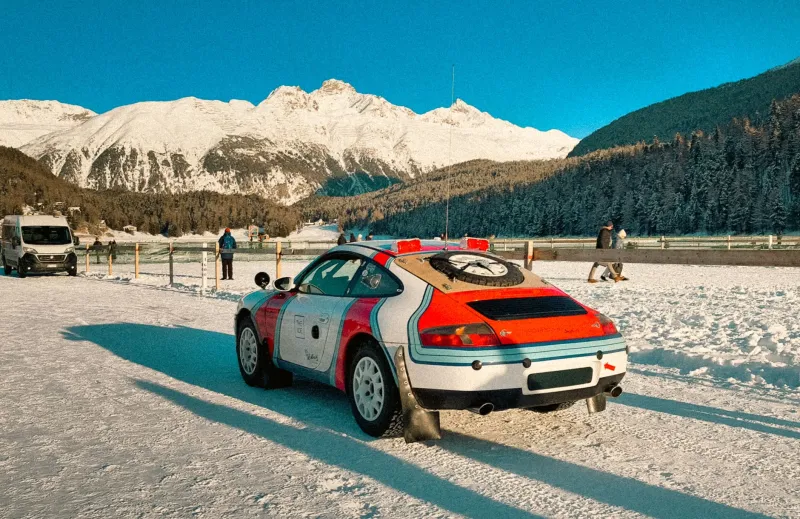
It's minus fifteen degrees somewhere above the Arctic Circle, the sun barely bothers to clear the treeline, and a British driver in a stripped-out hatchback is absolutely hoofing it sideways across a frozen lake at speeds that would make most people's eyes water. There's no spectator grandstand. No corporate hospitality. No live timing app. Just ice, instinct, and an engine screaming into the void.
This is the world of winter ice racing — and quietly, almost secretly, it's becoming one of the most important proving grounds for British motorsport talent you've never heard of.
The Frozen Underground
Ask most British motorsport fans about ice racing and you'll get a blank look, maybe a vague reference to rally cross or a half-remembered clip of a Scandinavian rally stage. But there's a proper, structured world of frozen lake competition happening every winter — in Scotland, Sweden, Finland, and Norway — that a growing number of UK drivers are tapping into with remarkable results.
The events themselves range from organised club days on Scottish lochs to full-blown international competitions on purpose-prepared circuits cut into frozen lake surfaces in Scandinavia. Some are sanctioned, some are decidedly grassroots, and a few exist in that gloriously murky grey area where the rulebook is thin and the commitment is total.
"It's not a secret exactly," laughs Jamie Forsyth, a 24-year-old from Inverness who's spent the last three winters racing on frozen water. "But nobody's putting up billboards about it either. You hear about it through the scene, through other drivers. Someone mentions it at a club night, you look it up, and suddenly you're booking flights to Lapland."
Forsyth competes in a modified rear-wheel-drive saloon with studded tyres — the one concession to the conditions that makes the whole thing even remotely controllable. Even then, 'controllable' is doing a lot of heavy lifting as a word.
What the Ice Teaches You
Here's the thing that every ice racing convert will tell you within about thirty seconds of meeting them: the ice teaches you things that no summer track ever could. It's not just about car control, although that's obviously a massive part of it. It's about patience, precision, and an almost meditative relationship with feedback.
On a conventional tarmac circuit, you can muscle through a mistake. You can use braking force, kerbs, the grip of a dry surface to paper over the cracks in your technique. The ice strips all of that away. There is no papering over anything. You either feel what the car is doing and respond correctly, or you're spinning into a snowbank.
"Tarmac is forgiving in ways you don't even realise until you drive on ice," says Elspeth Cairns, an engineer who has worked with several young British drivers during winter programmes in Finland. "On ice, the feedback window is so much smaller. The inputs you need to make are tinier, more precise. Drivers who come back from a proper winter programme are just... smoother. They've learned to listen."
That smoothness, engineers will tell you, is worth an enormous amount when those same drivers return to conventional competition. The sensitivity developed on a frozen lake — the ability to detect the earliest whisper of a tyre losing its edge — translates directly into faster, more consistent lap times on tarmac. It's counterintuitive but completely logical once you think it through.
Scotland's Quiet Scene
You don't have to travel to Scandinavia to get a taste of this world. Scotland, with its combination of remote highland lochs and brutal winter temperatures, has its own low-key ice racing culture that's been bubbling away for decades.
The gatherings — and 'gathering' really is the right word, there's something almost clan-like about the atmosphere — tend to happen on weekends when conditions align: cold enough, long enough, and with ice thick enough to safely support cars. Word goes out through WhatsApp groups and club forums. A few dozen cars materialise in a car park beside a frozen loch. By mid-morning, something resembling organised chaos is underway.
"It's as pure as motorsport gets," says Callum Reid, who organises one such event in Perthshire and has been doing so for the better part of a decade. "No prize money, no trophies really. People come because they love it. Because it's brilliant and terrifying and you learn something every single run."
Reid is careful about publicity — not because anything illegal is happening, but because the events work precisely because they're small, self-regulating, and attended by people who understand the risks and respect the environment. "The moment it becomes a spectacle, it changes," he says. "We've seen it happen with other things. We'd rather keep it special."
The Psychological Edge
Beyond the mechanical and technical lessons, several drivers point to something less tangible but arguably more significant: what ice racing does to your head.
Racing in conditions where the margin for error is essentially zero, where the surface beneath you is constantly changing with temperature and use, where your reference points can literally disappear under fresh snowfall — all of this demands a particular kind of mental composure. The drivers who thrive aren't necessarily the ones with the fastest reactions. They're the ones who stay calm, who process information clearly, who don't panic when the car starts to slide.
"I had a moment in my second season where I completely binned it," admits Forsyth. "Went straight on at a corner, ended up in a snowbank, completely unhurt but pretty shaken. And I had to get back in and drive again immediately. That's what ice racing teaches you — how to reset. How to not carry a mistake into the next corner, the next lap, the next race."
That psychological resilience, drivers and coaches agree, is one of the most transferable skills in all of motorsport. The ability to compartmentalise, to stay present, to not let one bad moment cascade into several — it's what separates good drivers from genuinely great ones.
Worth the Frostbite
None of this comes cheap or easy. Travelling to Scandinavia for a winter programme requires investment — in time, money, and a willingness to be comprehensively humbled by conditions you cannot fully prepare for. Even the Scottish events demand proper kit, mechanically sound cars, and a realistic understanding of what you're getting into.
But the drivers who've made that commitment are evangelical about it. Ask them whether the frozen fingers, the early mornings, the logistical headaches are worth it, and the answer is always immediate and always the same.
"A hundred percent," says Forsyth. "Every lap on ice makes me a better driver on tarmac. That's not a theory. I've seen it in my results. I've felt it in how I drive. The ice gave me something I couldn't have got any other way."
British motorsport has always had a knack for finding unconventional routes to the front. From the backyard engineers to the club racers grinding through the ranks, there's a culture here of doing things the hard way and being better for it. Ice racing fits that tradition perfectly — cold, uncompromising, and quietly producing some of the most complete drivers in the game.
Just don't expect to see it on a billboard anytime soon.