Last Lap of the Combustion Age: How Britain's Classic Car Scene Is Fighting to Keep the Flame Alive
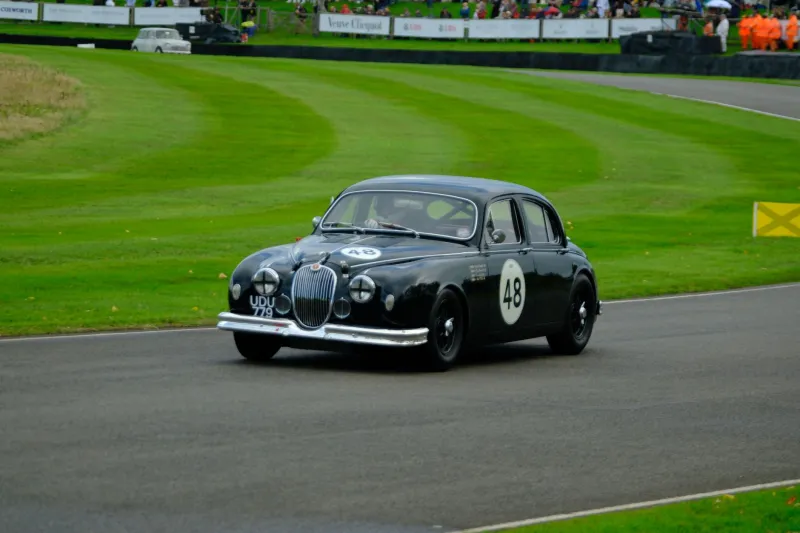
There's a particular sound that no synthesiser, no electric motor, no algorithm has ever convincingly replicated. It's the crack and bark of a naturally aspirated engine on a cold Sunday morning, the smell of hot oil mixing with damp grass, the mechanical theatre of a carburettor-fed straight-six being coaxed into life by someone who genuinely understands what they're doing. For a growing number of British enthusiasts, that sound has taken on a new urgency — because the calendar is running down.
The UK government's decision to ban the sale of new petrol and diesel cars by 2035 has done something unexpected. Rather than quietly ushering the combustion engine towards retirement, it has lit a fire under an entire subculture. Classic car registrations are climbing. Vintage racing series are reporting record entry lists. Heritage mechanics who once worried about the future of their trade are suddenly overwhelmed with work. Britain, it turns out, is not ready to say goodbye.
The Numbers Don't Lie
The Historic Automobile Group International reported that the classic car market in the UK has grown consistently over the past three years, with values on well-maintained examples from the 1960s through to the 1990s rising sharply. But it's not just collectors squirrelling away appreciating assets. The real story is happening on track.
Series like the HSCC (Historic Sports Car Club) are seeing younger entrants — drivers in their thirties and forties who grew up watching their dads tinker in garages — now buying into vintage racing with genuine competitive intent. The Goodwood Members' Meeting, once a niche gathering for the seriously committed, now feels like a cultural event on par with Glastonbury for a certain type of British petrolhead.
"We've had more first-time competitors in the last two seasons than in any comparable period in our history," says one HSCC series coordinator who preferred to remain unnamed. "People are coming to us and saying they want to race before it becomes politically impossible to celebrate this stuff. There's a real sense of now or never."
More Than Nostalgia
It would be easy — and lazy — to dismiss all of this as mere sentimentality. Middle-aged men clinging to a romanticised past, polishing things that should be left to rust. But spend any time in a classic racing paddock and that narrative falls apart pretty quickly.
Take Sarah Whitmore, a 34-year-old structural engineer from Coventry who races a 1973 Triumph Dolomite in club-level competition. She didn't grow up in a motorsport family. She came to classic cars through a combination of mechanical curiosity and frustration with what she calls "the disposable nature of modern vehicles."
"These cars were designed to be worked on," she says, hands still faintly stained with brake fluid despite a thorough scrubbing. "You can understand every single system. There are no black boxes, no proprietary software, no dealer lock-ins. It's honest engineering. And the fact that someone wants to legislate that away makes me want to celebrate it even harder."
That sentiment — part defiance, part reverence — runs through the classic scene like a seam of ore. It's not simply about opposing electrification. Most enthusiasts will tell you they have no particular problem with EVs existing. The objection is to erasure. To the cultural assumption that combustion engines are something to be ashamed of rather than understood, preserved, and yes, occasionally raced flat-out around a Wiltshire airfield.
The Heritage Mechanic's Dilemma
For the men and women keeping these machines alive, the stakes are both professional and deeply personal. Brian Calloway has run a specialist restoration workshop in Northamptonshire for over two decades. His waiting list, he tells us with a mixture of pride and exhaustion, currently stretches to eighteen months.
"The demand is unlike anything I've seen," he says, gesturing around a workshop that smells gloriously of old rubber and cutting fluid. "But I'll be honest with you — I'm worried about succession. Who's going to do this in twenty years? The young lads coming through are being pushed towards EV qualifications, battery systems, software diagnostics. The knowledge of how to properly rebuild a twin-cam head or fettle a Weber carburettor — that's genuinely endangered."
It's a concern echoed across the industry. Specialist colleges and apprenticeship programmes are pivoting hard towards electrification, which makes commercial sense. But it risks creating a skills vacuum around heritage vehicles that no amount of YouTube tutorials can fully address. Some in the classic community are already talking about formalised apprenticeship schemes specifically focused on pre-1990s mechanical knowledge — an unofficial curriculum for keeping the old ways alive.
What the Ban Actually Means for Racing
Here's where things get more nuanced, and where the panic occasionally outstrips the reality. The 2035 ban covers the sale of new petrol and diesel vehicles. It does not — at least under current legislation — prohibit the use, ownership, or racing of existing combustion-engined cars. Classic motorsport, in theory, should be legally untouched.
But the enthusiast community is understandably wary of where the logic leads. If petrol becomes increasingly expensive and difficult to source in a future dominated by electric infrastructure, if insurance becomes punitive, if the cultural and political pressure to condemn combustion engines intensifies — the practical freedoms may erode even without an outright ban.
"Nobody's saying you won't be allowed to race your old Lotus Elan in 2040," admits one Goodwood regular with a wry smile. "But will there be a filling station near the circuit? Will your kids think you're an eccentric embarrassment? Will the local council still grant a noise permit for a hillclimb? These are the real questions."
Finding Meaning in the Movement
What makes the current surge in classic and vintage racing genuinely fascinating — rather than merely reactive — is the depth of community it's generating. These aren't just people buying old cars. They're forming networks, sharing knowledge, mentoring newcomers, and making a collective argument about what motorsport means and where its identity lives.
For many, the combustion engine isn't just a piece of technology. It's the medium through which generations of British motorsport history was written. The soundtrack of Silverstone in the 1960s. The smell of Brands Hatch on a summer afternoon in 1978. The tactile, physical, occasionally terrifying experience of driving something with real mechanical character — something that pushes back.
The electric future may well be faster, cleaner, and objectively superior in a dozen measurable ways. Nobody serious is arguing otherwise. But there's something being asked to step aside that goes beyond emissions figures and energy efficiency. And Britain's classic car community, revving harder than ever, is determined to make sure it's heard before the last lap is run.
The flame isn't out yet. Not by a long shot.