Soul in the Cylinders: Can Britain's Classic Racers Survive the Electric Age?
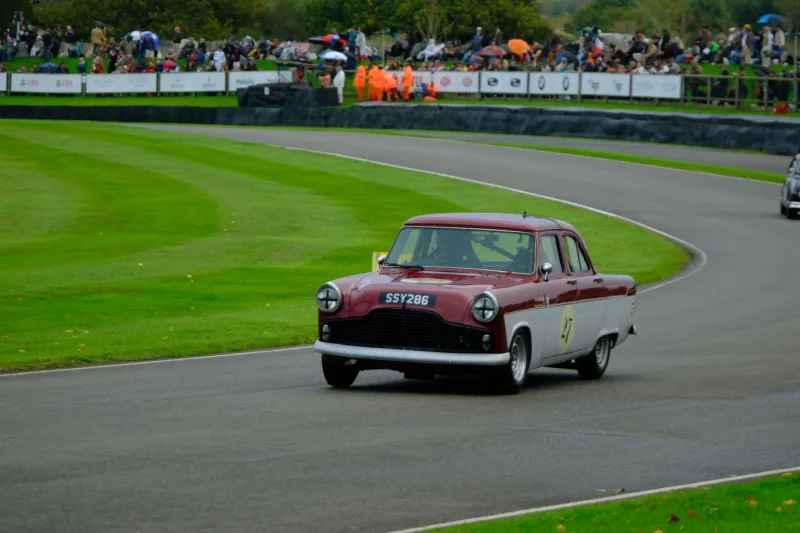
There's a particular kind of silence that descends over a paddock when someone mentions the word "electrification" to a group of classic car racers. It's not the silence of contemplation. It's the silence of a man who's just been told his religion might be outlawed.
Britain's heritage motorsport community — a sprawling, passionate, deeply knowledgeable world of weekend warriors and obsessive restorers — is caught in a genuinely uncomfortable place right now. On one side, governing bodies and environmental regulators are applying increasing pressure to reduce emissions across all forms of motorsport. On the other, you've got drivers and engineers who've spent the better part of their adult lives learning the precise mechanical language of a 1960s straight-six or a period-correct V8. The idea of swapping that out for a battery pack and a motor controller isn't just technically daunting. For many, it feels like a kind of betrayal.
The Heritage Dilemma
Speak to anyone who organises a classic racing series in this country and you'll hear the same tension expressed in slightly different ways. The Historic Sports Car Club, the VSCC, the various marque-specific championships that dot the British motorsport calendar — they're all grappling with the same fundamental question: what exactly are we preserving, and for whom?
"The whole point is authenticity," says one organiser of a long-running pre-war racing series, who asked not to be named while discussions with his governing body are ongoing. "When someone brings a 1934 Riley to the grid, they're not just racing a car. They're keeping a piece of living history alive. The noise, the smell, the mechanical drama — that's not incidental. That is the experience."
And he's got a point that's hard to argue with. Classic motorsport in Britain isn't simply a competitive endeavour. It's a form of custodianship. The people who race these machines are, in many cases, the reason those machines still exist at all. Strip out the combustion engine and you don't just change the drivetrain — you fundamentally alter the relationship between the car and its history.
The Engineering Nightmare
Beyond the philosophical objections, there's the small matter of actually making electrification work in cars that were never designed with it in mind. Engineers who've spent years mastering the quirks of vintage powertrains are finding the prospect of conversion projects somewhere between daunting and farcical.
Dave Holloway, a retired aerospace engineer who now builds and prepares historic Formula Ford cars from a unit in Northamptonshire, is characteristically blunt about it. "The weight distribution alone would be a catastrophe on most of these cars. You're talking about chassis that were engineered around specific power delivery characteristics. Swap in an electric motor and you've got completely different torque curves, different weight placement, different thermal management requirements. You'd essentially need to re-engineer the whole car from scratch. At that point, what are you actually racing?"
It's not just the technical challenges, either. The sourcing and maintenance of period-correct batteries — assuming such a thing could even exist — would require an entirely new supply chain, new expertise, and new tooling. The cottage industry of specialists who currently keep Britain's classic racing scene running couldn't simply pivot overnight.
A Generational Fault Line
What makes this debate particularly interesting is the way it's dividing along generational lines — though not quite in the way you might expect. Plenty of younger enthusiasts who've grown up with EVs are actually among the most vocal defenders of combustion-powered classics. Meanwhile, some veterans who've been racing since the 1970s are more open to the idea of evolution than their reputations might suggest.
Claire Meredith, 34, who races a beautifully prepared Lotus Elan in a 1960s sports car championship, represents the former camp. "I drive a Nissan Leaf to work every day and I think electric cars are brilliant for what they are," she says. "But the Elan is a different thing entirely. It's not transport. It's a time machine. The whole point is that it's original. If I wanted to race an EV, I'd go race an EV."
By contrast, veteran racer and former engineer Terry Ashworth, who's been competing in historic single-seaters for over three decades, offers a more pragmatic view. "I've seen this scene evolve constantly. Safety regulations have changed these cars enormously over the years — roll cages, harnesses, fire suppression systems — none of that was original either. If electrification is what keeps us on track, I'd rather adapt than watch the whole thing get banned."
The Regulatory Horizon
For now, no British governing body has imposed mandatory electrification on classic racing categories. But the direction of travel at both national and European level is clear enough to make people nervous. Motorsport UK has been increasingly engaged with sustainability initiatives, and while the organisation has been careful to acknowledge the unique nature of heritage motorsport, the pressure from above isn't going away.
Some series are already experimenting with compromise solutions — synthetic fuels, for instance, have generated genuine excitement as a potential path that preserves the combustion experience while dramatically reducing the carbon footprint. Several British championship organisers are quietly lobbying for synthetic fuel exemptions to be built into any future regulatory framework, arguing it offers a route that satisfies environmental concerns without gutting the soul of the sport.
"Synthetic fuels feel like the honest answer," argues one technical delegate for a major historic championship. "You keep the noise, the mechanical character, the whole experience — and you can make a credible environmental argument. That feels like a solution everyone could live with."
What's Actually at Stake
Strip away the technical arguments and the regulatory chess, and what you're really talking about is the preservation of a particular kind of British motorsport culture — one that's been quietly thriving in paddocks from Donington to Thruxton for generations.
The classic racing scene doesn't make headlines the way Formula 1 does. It doesn't attract the sponsorship budgets or the television cameras. But it's the place where the history of British motorsport is physically kept alive, where the cars that defined eras are still driven hard and maintained with obsessive care.
If the electrification push is handled clumsily — if mandates are imposed without nuance, without consultation, without proper consideration of what makes heritage racing different from every other form of motorsport — there's a real risk that the community simply retreats. That cars get locked in garages. That series fold. That the living, breathing, roaring connection to Britain's automotive past quietly dies.
That would be a loss that no battery pack could compensate for.