The Quiet Climb: Why British Hillclimbing Is Motorsport's Best-Kept Secret
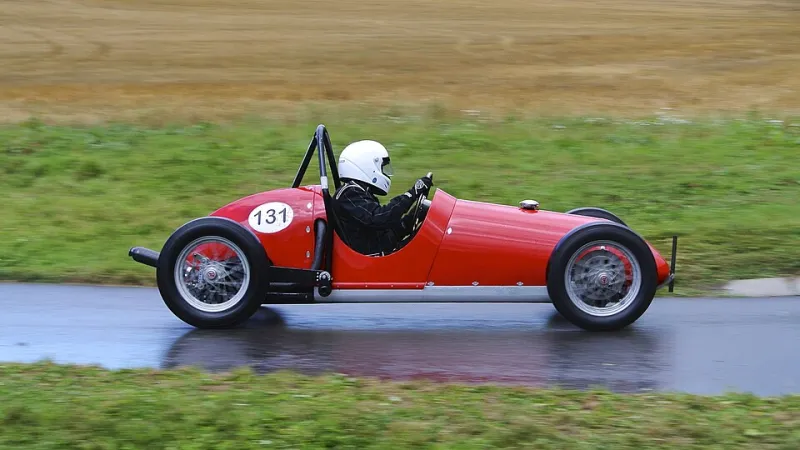
Photo: Ian Kirk from Broadstone, Dorset, UK, CC BY 2.0, via Wikimedia Commons
There is a hill in Worcestershire that cars have been racing up since 1905. It is a thousand yards long, it runs between trees and drystone walls, and the startline looks like it belongs to a village fete rather than a motorsport venue. Then a single-seater goes past and the whole thing stops making sense — the speed, the noise, the sheer cheek of it in that space.
That's Shelsley Walsh, the oldest motorsport venue in the world still using its original course. And it's the perfect introduction to a branch of the sport that millions of British enthusiasts have never once considered: hillclimbing and sprinting.
What actually happens on a hillclimb day
Strip away the romance and the format is beautifully simple. You sign on, you present your car for inspection, you get a practice run or two up the hill, and then you get two timed runs. Your best time counts. The quickest cars go through to a run-off at the end of the day. That's it.
The paddock doubles as the pits, which means the entire field queues in the open, engines idling, waiting to be called to the start. There's no garage to hide in and no pit wall to hide behind. If your car is misfiring, everyone within twenty metres knows about it, and at least three of them will offer an opinion.
The class system is the whole trick
Here's why hillclimbing works: the classes. A standard road-going MX-5, a modified Clio, a Westfield, a 1970s Escort and a purpose-built 600bhp single-seater can all appear at the same meeting, and all of them have somebody to race.
Road-going production classes are exactly what they sound like — taxed, tested, essentially standard cars, often driven to the venue and driven home again. Then you move up through road-modified, into modified production and specialist classes, and finally into the racing-car classes where the serious championship contenders live.
That ladder is the secret. You don't need a trailer, a race licence upgrade or a tow vehicle to start. You need a Motorsport UK competition licence that covers speed events, membership of the organising club, a helmet, overalls and a car that passes inspection. Most beginners turn up in something they already own.
Cheaper than you think, dearer than you'd like
Let's be honest about money, because that's what everyone asks. A club hillclimb entry fee is typically in the low hundreds, and a sprint at somewhere like Curborough or Three Sisters can be less. Compare that with a circuit race weekend and it's not close. You also don't need a crew. Plenty of competitors run entirely solo: drive there, sign on, race, drive home.
What you can't avoid is the escalation. Start in a road-going class and you'll soon be eyeing a set of sticky tyres, then a trailer, then a dedicated car. The top end of the British Hill Climb Championship is serious business, with imported single-seaters, aero packages and engineering budgets that would make a club racer wince. Hillclimbing is affordable to enter and ruinously easy to spend money on. That's motorsport all over.
The paddock is the attraction
Ask regulars what keeps them coming back and the answer is rarely the lap times. It's the atmosphere. Hillclimb paddocks run on tea, deckchairs and inherited knowledge. There's usually a man who has campaigned the same car since before you were born, and he will tell you exactly what gearing you want for the top Esses whether you asked or not.
It's also one of the last places in British motorsport where spectators can wander the paddock, peer into engine bays and chat to drivers between runs. Try that at a national circuit meeting and see how far you get.
Where to go
Shelsley Walsh and Prescott in Gloucestershire are the two classics — Prescott is run by the Bugatti Owners' Club and has been hosting events since the late 1930s. Add Loton Park in Shropshire, Harewood in Yorkshire, Wiscombe Park in Devon, Gurston Down in Wiltshire and Doune up in Scotland for the brave. Sprints fill in the calendar at Curborough, Three Sisters and Blyton Park.
The season broadly runs from spring to early autumn, and spectator tickets are pocket money compared with most motorsport. Take a picnic, stand near a fast corner, and listen to how differently a road-going hatchback and a specialist single-seater attack the same piece of tarmac.
The case for going
Hillclimbing doesn't shout about itself. There's no television deal, no celebrity grid and no fireworks. What it has instead is close competition, a genuinely low barrier to entry and a paddock that treats newcomers like future friends.
If you've been circling the idea of competing for years and telling yourself it's too complicated, this is the branch of the sport to try. One hill. Two runs. Your name on a timing sheet. It gets under your skin faster than you'd believe.