Mud, Guts, and Glory: How Club Racing Became Britain's Fastest-Growing Weekend Obsession
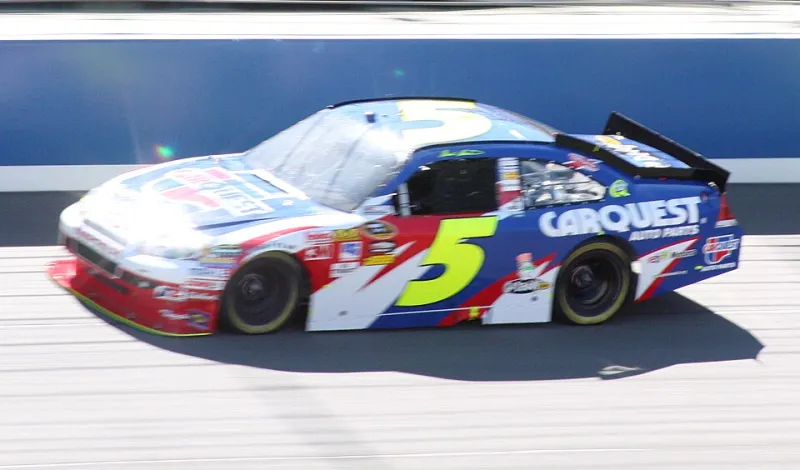
Photo: Raniel Diaz, CC BY 2.0, via Wikimedia Commons
It's eight o'clock on a damp Saturday morning at Anglesey Circuit in North Wales. The paddock smells of Castrol and bacon sandwiches in roughly equal measure. A retired PE teacher from Wrexham is arguing cheerfully with his teenage son about tyre pressures. Three bays down, a nurse from Sheffield is suiting up for only her second ever competitive race. And over by the scrutineering bay, a queue of battered-but-beloved single-seaters stretches back further than the circuit marshal can quite believe.
This is grassroots motorsport in 2024 — and it has never, in living memory, looked quite this alive.
The Post-Pandemic Spark
The numbers tell a compelling story. Motorsport UK, the sport's governing body, reported a significant uptick in competition licence applications from 2022 onwards, with some regional clubs seeing membership grow by 30 to 40 per cent compared to pre-pandemic figures. Waiting lists for popular championships — particularly in the 750 Motor Club's various series and the BRSCC's entry-level categories — became a genuine talking point among organisers for the first time in years.
What happened? The pandemic, counterintuitively, seems to have lit a fuse under people's appetite for real, physical, risky, joyful experience. Two years of cancelled events, closed circuits, and enforced domesticity apparently gave a lot of people time to think about what they actually wanted to do with their weekends — and a surprising number of them concluded the answer was "drive a racing car as fast as possible."
"We had people coming to us who'd been watching motorsport their whole lives and just assumed it was out of reach," says Dave Hartley, who organises a popular club championship in the East Midlands. "Lockdown gave them the headspace to actually look into it properly. And when they did, they realised it was far more accessible than they'd thought."
The Accessibility Revolution
That accessibility point is crucial, and it's worth unpacking. A full season in something like a Caterham Seven Academy or a Mazda MX-5 championship — car, tyres, entry fees, and basic preparation — can be done for somewhere in the region of £8,000 to £15,000. That's not pocket change, but it's not a second mortgage either. Split across a couple of years, or shared with a co-driver arrangement, it becomes genuinely achievable for a working professional with a modest motorsport budget.
The kit car and single-seater markets have also benefited from a wave of reasonably priced second-hand machinery coming onto the market. Older Formula Ford cars in particular have become something of a gateway drug — mechanically simple, brilliantly fun to drive, and available for well under £5,000 if you're patient and handy with a spanner.
Social media has played its part too. YouTube channels dedicated to budget motorsport builds, TikTok accounts following rookie racers through their first seasons, and active communities on Reddit and Facebook have collectively made the whole scene feel more visible and more welcoming than it perhaps ever has before.
Community: The Secret Ingredient
Speak to anyone who's made the leap from spectator to competitor and they'll almost invariably mention the same thing: the people. Club motorsport has a tribal warmth to it that's genuinely difficult to find in other sports. Rivals help each other fix broken cars between sessions. Experienced drivers mentor newcomers without being asked. Families set up camping chairs and watch each other race with the kind of genuine investment usually reserved for a child's school play.
"I came for the racing and stayed for the community," admits Sarah Okafor, who took her first competition licence in 2022 after years of track days. "I've made proper friends through this. People I'd never have met otherwise. That sounds cheesy but it's completely true."
This communal dimension is something organisers are increasingly leaning into. Several clubs now run dedicated newcomer evenings, pairing first-year competitors with experienced mentors. Others have introduced social events, paddock barbecues, and end-of-season awards nights that feel more like a local sports club than anything resembling the corporate world of professional motorsport.
Sponsors Are Taking Notice
Where there are engaged communities, there are commercial opportunities — and local and regional businesses are beginning to cotton on. A club racing car might not offer the global eyeballs of an F1 livery, but it offers something arguably more valuable for a local firm: hyper-targeted visibility among an affluent, passionate, and highly engaged audience.
"Our sponsor is a local car detailing business," explains Tom Birkett, who competes in a regional touring car series. "They put a few hundred quid in, their logo goes on the car, I mention them on my Instagram. It's not glamorous, but they've told me they've had actual customers come in specifically because they saw the car at Oulton Park. That's a real return."
For businesses, the authenticity angle is compelling too. Sponsoring a grassroots racer feels genuine in a way that a billboard doesn't. The driver is a real person, probably a local, telling a real story. In the age of content and social media, that narrative value is increasingly understood.
The Professional Pipeline
Perhaps the most exciting dimension of the grassroots boom is what it means for the future of British motorsport at the highest levels. The traditional pathway from karting to single-seaters to the professional ranks is well-established — but it's expensive and increasingly dominated by drivers with serious financial backing.
Club racing offers an alternative proving ground. Several recent graduates of Motorsport UK's Scholarship programmes — designed specifically to identify talent that might otherwise be overlooked — have made meaningful steps into junior professional categories after cutting their teeth in club championships. The talent is there. The grassroots scene is increasingly providing the platform to find it.
For now, though, the most important story isn't the professional pipeline. It's the PE teacher from Wrexham arguing about tyre pressures with his son. It's the nurse from Sheffield discovering she's actually quite rapid in the wet. It's the simple, brilliant, slightly mad fact that on any given weekend across Britain, hundreds of ordinary people are doing something extraordinary — going racing.
And there's never been a better time to join them.