No Driver, No Soul? How Autonomous Racing Is Forcing Britain to Ask What Motorsport Is Really For
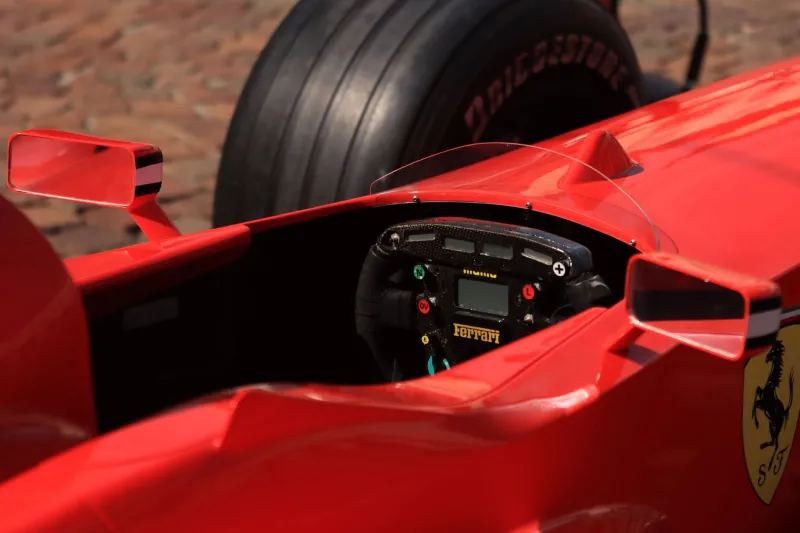
Let's start with a moment. Not a data point or a technology briefing — an actual moment. You're standing at Brands Hatch on a damp October afternoon, the smell of Castrol and wet tarmac in the air, and a pack of Formula Ford cars comes screaming through Paddock Hill Bend. Each one is being hurled into that terrifying downhill compression by a human being making split-second decisions, managing fear, managing ambition, managing the very real possibility of getting it badly wrong. Your stomach drops with them. You feel it.
Now imagine the same corner, same speed, same noise — but nobody inside. A camera feed and a processor making the inputs. The lap time might actually be quicker. But is that the same feeling? Is that motorsport?
This is the question that autonomous racing is forcing onto the agenda, and it's one that Britain — as one of the world's great motorsport nations — can't afford to ignore or dismiss.
The Technology Is Real and It's Moving Fast
First, let's be clear: this isn't a theoretical debate about some distant future. The Roborace project, for all its stop-start development history, demonstrated that fully autonomous racing vehicles could navigate real circuits at serious speeds. The Abu Dhabi Autonomous Racing League has put driverless single-seaters on track in front of live crowds. University research programmes — including several at UK institutions — are producing autonomous driving systems of increasing sophistication, often using motorsport as both a testing ground and a showcase.
The argument from the technology community is straightforward. Autonomous racing accelerates the development of safety-critical AI systems. It produces transferable innovations in sensor fusion, real-time decision-making, and machine learning. It's a legitimate and valuable engineering discipline. None of that is wrong.
And yet. And yet.
What the Drivers Say
Talk to anyone who's actually raced — not simulator-raced, actually strapped in and gone wheel-to-wheel with another human being — and you'll hear a consistent theme. The risk is the point. Not recklessness, not a death wish, but the very real, very human experience of managing danger with skill and nerve. The reward of a clean lap, a perfectly judged overtake, a car saved from a spin that nobody else even noticed was coming — these things mean something because a person did them, under pressure, with consequences.
Drivers coming up through British club motorsport — karting at circuits like Rowrah or PF International, single-seaters in the BRDC British F3 championship, tin-tops in the Ginetta Junior series — aren't just learning to go fast. They're learning who they are under pressure. They're building the mental architecture of a racing driver. That process, that journey, is inseparable from what motorsport actually is at its grassroots level.
An autonomous vehicle cannot have that journey. It cannot be nervous on the grid. It cannot dig deep when it's three tenths down with two laps to go. And for a huge proportion of the British motorsport community — the hundreds of thousands of people who watch, marshal, volunteer, spanner, and compete at club level every weekend — that human dimension isn't a peripheral feature. It's the entire product.
The Purist's Concern
Here's what genuinely worries some of the more thoughtful voices in British motorsport. It's not that autonomous racing will replace human racing overnight — nobody seriously believes that. The concern is more subtle.
As autonomous vehicle technology becomes increasingly sophisticated and commercially valuable, the funding, the media attention, and the engineering talent that currently gravitates towards human motorsport may start to drift. If a major manufacturer can get more relevant data and better PR from an autonomous racing programme than from sponsoring a human driver, the commercial calculus changes. And commercial calculus, in motorsport, eventually determines what survives.
Britain's grassroots racing ecosystem — the club events, the hillclimbs, the sprints, the banger racing — runs on passion and runs lean. It doesn't take much disruption to the funding and attention ecosystem to start pulling threads from a fabric that's already stretched pretty tight.
A Different Kind of Spectacle
To be fair to the autonomous racing advocates, they're not entirely wrong when they argue that the spectacle could evolve into something genuinely compelling on its own terms. Watching two AI systems go head-to-head, each one adapting in real time to the other's strategy, operating at the absolute limit of what physics allows — there's an intellectual fascination there, even if it doesn't make your stomach drop the way Brands Hatch on a wet afternoon does.
Perhaps the more honest framing is that autonomous racing and human racing are simply different things, serving different purposes and different audiences. The mistake would be to let one cannibalise the other, or to allow the prestige and investment attached to cutting-edge technology to crowd out the human story that's been the backbone of British motorsport culture for over a century.
The Real Question
So can driverless racing ever be truly 'motorsport mad' in the way we mean it? Probably not, if we're being straight with ourselves. The madness in motorsport — the obsessive dedication, the irrational financial decisions, the getting-up-at-five-in-the-morning-to-tow-a-trailer-to-Anglesey energy — comes from people. It comes from the driver who's been dreaming about this since they were eight years old. It comes from the dad in the paddock who's remortgaged the van to give their kid a shot. It comes from the marshal standing in the rain at Donington because they love it.
Technology will keep advancing. Autonomous racing will keep developing. And that's fine — genuinely, it's fine. But let's be clear-eyed about what it is and what it isn't. It's an engineering competition. A fascinating, valuable, impressive engineering competition.
Mototsport, the real stuff, is something else entirely. It's human. It's messy. It's brilliant. And Britain, of all places, should know better than to let anyone convince us otherwise.