Rain Stops Play? Good. Why British Weather Is Motorsport's Great Equaliser
Let's Get One Thing Straight
I've lost count of the number of times I've heard a paddock conversation end with an apologetic sigh: "typical British weather, ruining another race weekend."
Rubbish. Absolute rubbish. British weather doesn't ruin race weekends. It makes them. And it's high time we stopped treating our meteorological misery as a bug when it's actually the best feature British motorsport has.
The Legends Were Made in the Wet
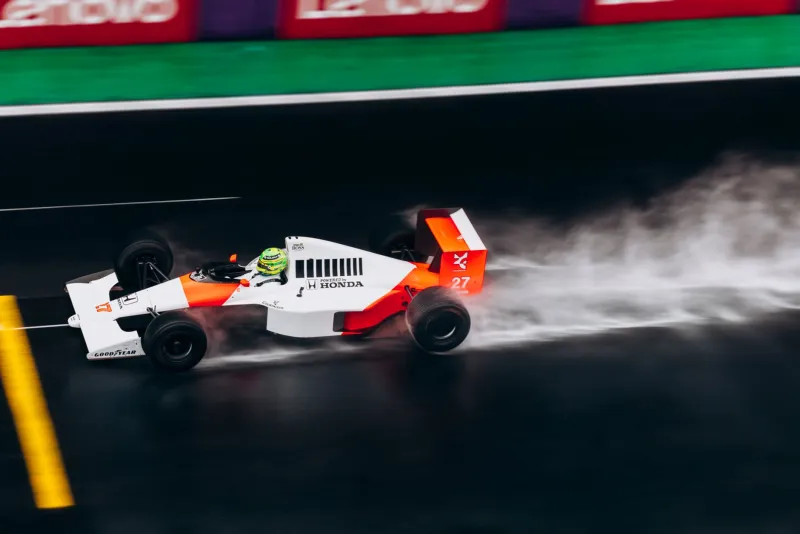
Think about the racing moments that genuinely live in the memory. The touring car monsoons where half the grid ended up in the scenery and the other half became national treasures. Club meetings where the entire grid converted to wets on old-fashioned slicks and produced thirty laps of pure, glorious chaos.
Dry-weather racing rewards whoever has the biggest budget. Wet racing rewards whoever has the most nerve. And that, dear reader, is precisely why the great British weather is the greatest equaliser our sport has ever known.
The Great Leveller of Budgets
Here's the uncomfortable truth about modern motorsport: money buys lap time. Data acquisition, dampers worth more than my first car, wind tunnel time — the big teams buy performance by the pound.
Then the sky opens.
A drying line that doesn't exist yet. A river across the apex at the hairpin. Grip levels that change lap to lap, corner to corner. Suddenly the £500,000 budget means nothing and the club racer with thirty years of soggy Sunday afternoons behind them means everything. The wet hands the underdog a weapon no chequebook can buy.
Watch a wet club race and you'll see it time and again: the backmarker all season suddenly carving through the field like a man possessed, while the championship leader tiptoes around wondering what's happened to his season.
Chaos Is a Feature, Not a Bug
The purists will complain that weather ruins the racing product — that a pile-up at the first corner in standing water isn't "proper racing." I'd argue the opposite. Unpredictability is the entire point.
Nobody retells the story of a processional dry race won by three seconds. Everybody retells the story of the day the heavens opened, the safety car led for six laps, and a journeyman in a fourteen-year-old car took the most unlikely win of their life.
Even the spectacle of a red flag — everyone huddled in the garages, tea urns working overtime, mechanics frantically taping over every orifice on the car — is pure motorsport theatre. You don't get that in a climate-controlled stadium.
It's Part of Who We Are
There's a deeper point too. Racing in foul weather isn't an accident of geography — it's woven into the British motorsport identity. We're the nation that races through it, that jokes about it, that packs the car with three sets of tyres in July because you never know.
Our drivers are famously adaptable partly because they learned their craft on damp, greasy British circuits where conditions changed every five minutes. Ask any of the current British stars on the world stage where they learned car control and the answer usually involves a wet kart track somewhere between Milton Keynes and Wigan.
A Defence of the Soggy Sunday
So the next time the forecast looks grim and you're tempted to give a club meeting a miss, remember what you might be throwing away. Some of the best racing you'll ever witness happens on the days when sensible people stay home.
The wet days are when legends are made, budgets are rendered irrelevant, and the sport remembers it's supposed to be fun. Britain's worst weather produces its best stories — and I, for one, wouldn't have it any other way.
Now pass the waterproofs. The qualifying session's been delayed and it's absolutely chucking it down. Perfect.