The Cost of the Chase: How Soaring Expenses Are Forcing Britain's Race Teams to Pick Their Battles
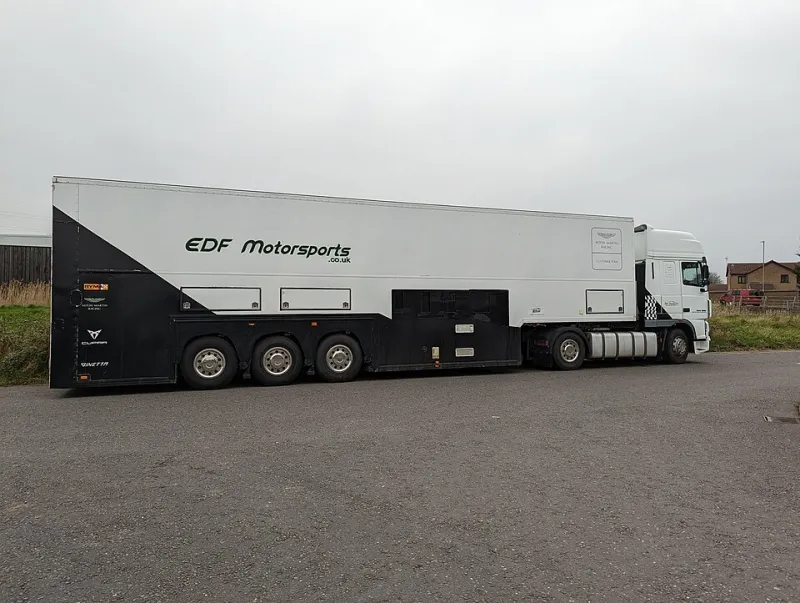
Photo: Bob Harvey , CC BY-SA 2.0, via Wikimedia Commons
There's a particular kind of silence that descends on a paddock when a familiar transporter isn't there. The spot where Dave's Clio Cup entry used to sit on a Saturday morning, the gap where a three-car team ran last season and now runs one. British motorsport's financial crisis isn't always announced loudly. Sometimes it just shows up as an absence.
The numbers behind that silence are stark, and they're getting harder to ignore.
What's Actually Happened to Costs
Let's start with the basics. Fuel — both for the race cars themselves and for the diesel vans and transporters that haul everything to the circuit — has remained stubbornly elevated compared to pre-2021 levels. The average cost of transporting a single race car from, say, Yorkshire to a circuit in the South of England and back has risen by an estimated 30-40% over the past three years when you factor in fuel, driver wages, overnight accommodation, and wear on the vehicle.
Circuit hire fees haven't helped. Several UK venues have increased their charges for club racing events, citing their own rising operational costs — energy bills, staffing, insurance premiums. Silverstone, Donington Park, and Brands Hatch remain aspirational venues for club racers, but the cost of a grid slot at a premier venue is increasingly prohibitive for a privateer running on a shoestring.
Tyre prices across multiple categories have risen significantly. In some formulae, a full set of slicks now costs what an entire race weekend budget looked like five years ago. Entry fees for championship rounds have crept upwards. Even the incidentals — the parts, the consumables, the fuel additives, the hotel room near the circuit — add up to a figure that would make your eyes water.
The Calendar Is Already Changing
The effects are showing up directly in how calendars are being constructed and how teams are responding to them.
Several regional club racing championships have quietly trimmed rounds from their calendars in recent seasons. The official reasoning varies — circuit availability, scheduling conflicts — but paddock conversations tell a different story. Organisers are seeing lower grid entries at events that require long travel, and the commercial logic of running a round with twelve cars when you need twenty-five to break even is inescapable.
The BRSCC, BARC, and other organising bodies are acutely aware of the problem. Some have introduced fuel cost supplements into their entry fee structures, while others have tried clustering events geographically to reduce travel burden. But there's no clean solution when the underlying economics are working against you.
One series coordinator, speaking to us off the record, put it bluntly: "We've lost three regular competitors this season who've told us directly that they can't justify the travel costs for the rounds further south. They're not quitting motorsport — they're just being selective. And when everyone gets selective, grids shrink."
The Brutal Choices Teams Are Making
For the privateers who form the backbone of British club racing, the decision-making has become genuinely painful.
Steve Hartley runs a two-car family team in a popular tin-top series out of the North West. Last year he contested a full championship season. This year, he's targeting eight of the twelve rounds — specifically the ones within a two-hour drive of his home base. "We sat down in January with a spreadsheet and worked out what the full season would cost us. It wasn't close to being manageable. So we've had to be honest about which rounds matter for the championship and which ones we can skip without falling too far behind."
The strategic calculus of a truncated season creates its own problems. Bonus points, dropped scores, and the psychological momentum of a full campaign are all affected when you're essentially running a part-time schedule in a full-time championship. Steve's realistic about his title chances. "We're racing to race. The championship's probably beyond us now. But at least we're still out there."
Others haven't been so fortunate. Several teams in the paddock communities we spoke to have stepped back entirely from organised championship racing, opting instead for trackday events or one-off invitational meetings where the cost-per-lap ratio feels more defensible.
Where the Ingenuity Comes In
British motorsport has always been defined by a particular brand of stubborn creativity, and that spirit hasn't entirely deserted the paddock.
Shared transporters are making a comeback. Groups of three or four teams from the same region are pooling logistics costs, sharing the fuel bill for a single large vehicle rather than each running their own van. It sounds obvious, but the coordination required has historically put people off. Rising costs have made the conversation easier to have.
Sponsorship hunting has intensified, with teams approaching local businesses that might never have considered motorsport association. Several teams have reported success pitching to companies whose own costs have risen — the argument being that motorsport sponsorship offers visible local marketing at a fraction of the cost of traditional advertising.
Some drivers have pivoted to series that are geographically concentrated. The growth of regional championships — designed specifically to keep travel distances manageable — has been notable. They may not carry the prestige of a national series, but they're keeping people racing, and right now, that matters more than the letterhead on the trophy.
The Bigger Picture
What's happening to British club racing is a microcosm of a broader economic reality. The sport has always asked its participants to subsidise their own passion, and for most of its history, enough people have been willing to do so. The question now is whether the financial bar has been raised to a point where the pool of willing participants begins to meaningfully shrink.
There are no easy answers and no villains in this story — not the circuits, not the organising bodies, not the fuel companies. It's a systemic squeeze, and the people feeling it most acutely are the ones who can least afford to absorb it: the grassroots heroes who turn up every weekend because they simply can't imagine doing anything else with their Saturdays.
They deserve better than a spreadsheet telling them they can't afford to race. And British motorsport needs them more than it sometimes remembers to say.